
Center for Islamic Civilization
The permanent exhibition New Uzbekistan — the Foundation of a New Renaissance explores the country's present and future.
Pitch and SILA SVETA served as the exhibition's general contractors. Working with an international team of partners, we were responsible for the complete delivery of the project — from the concept, architecture and engineering to construction, multimedia systems and content production for eight thematic zones covering 1,400 m².
SILA SVETA also created a permanent projection mapping show for the museum's façade, establishing a new cultural landmark in Tashkent.
The entire process, from the initial idea to the launch, took 7.5 months. Projects of this scale would normally require between eighteen months and two years to complete.
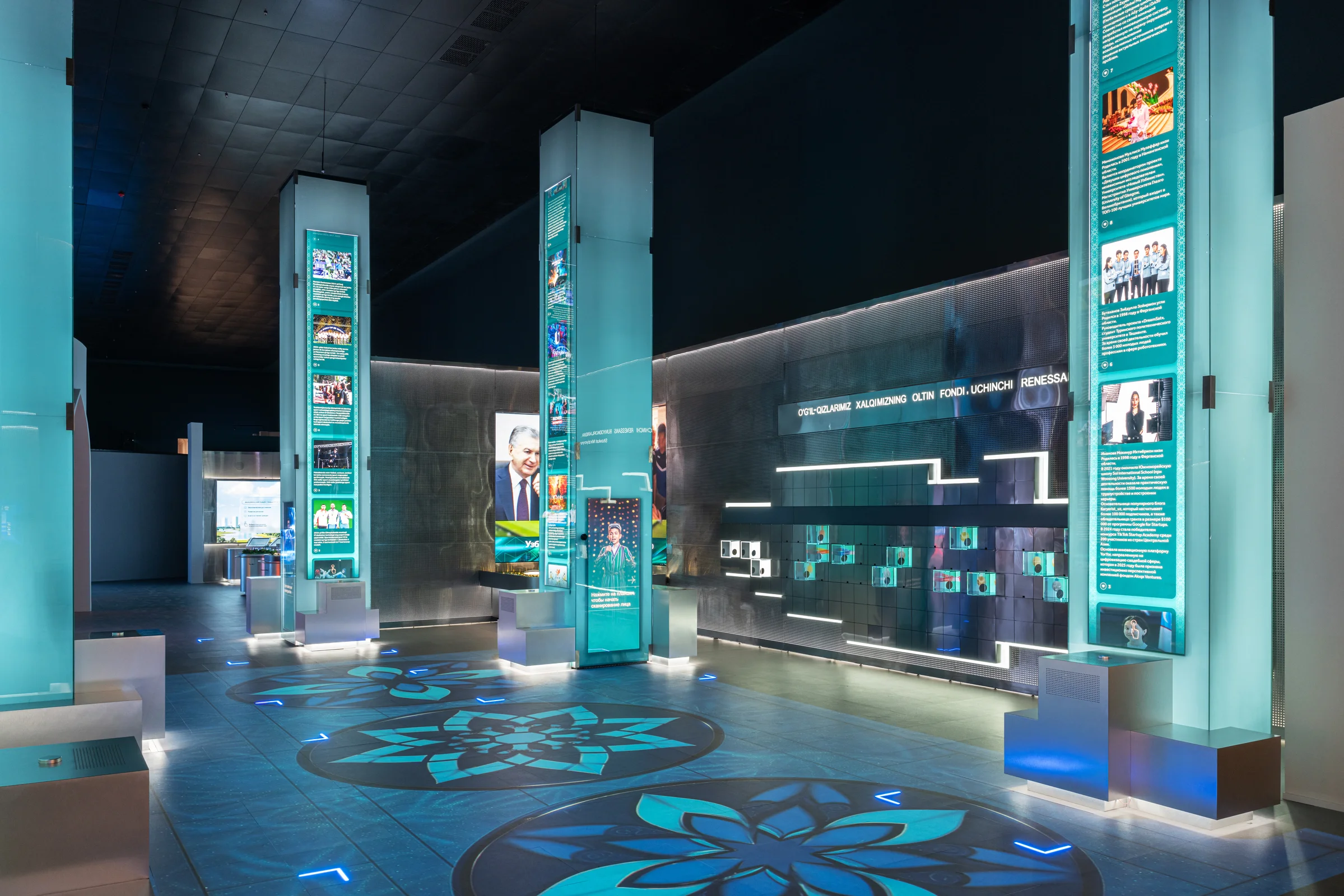
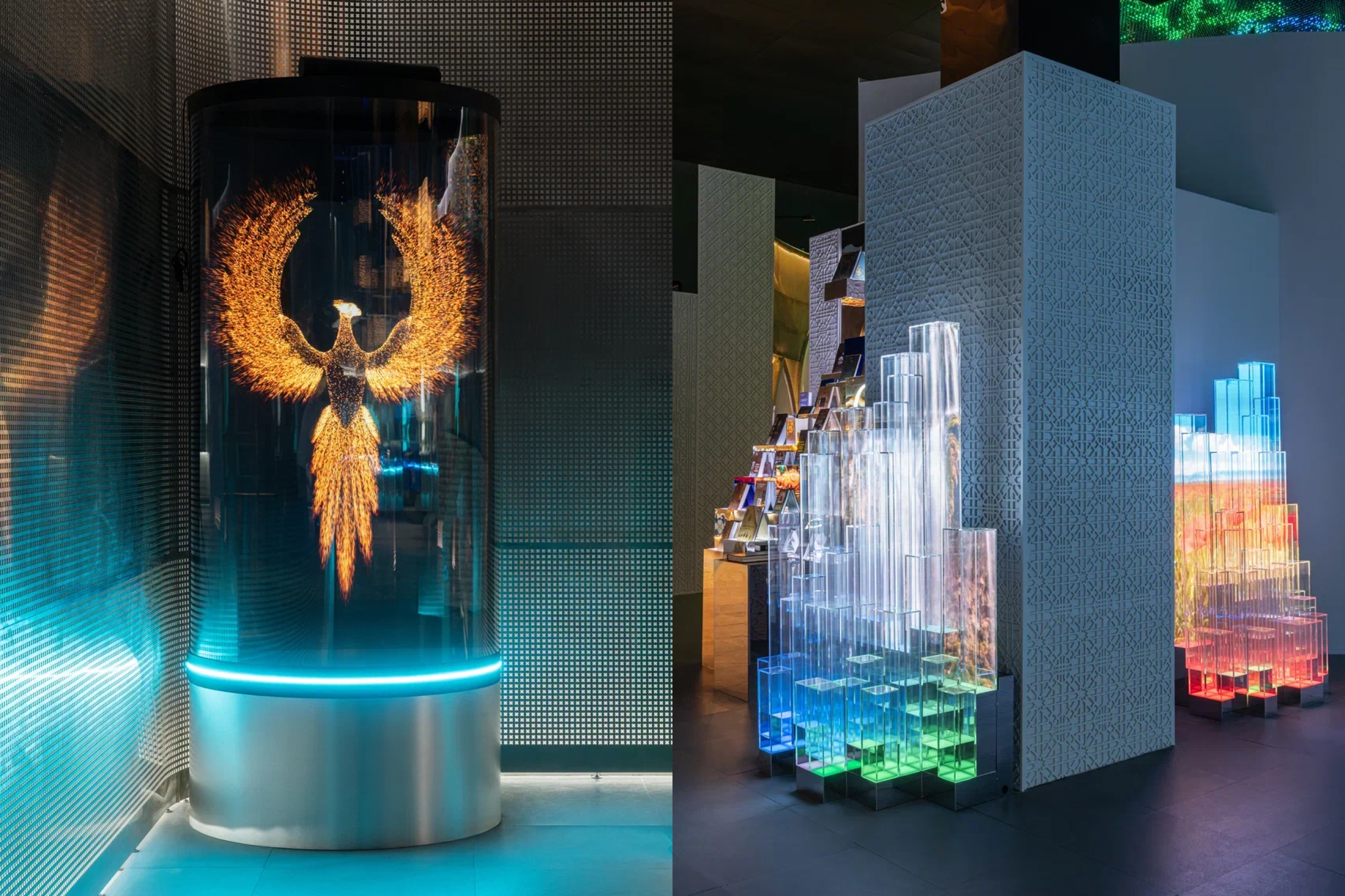
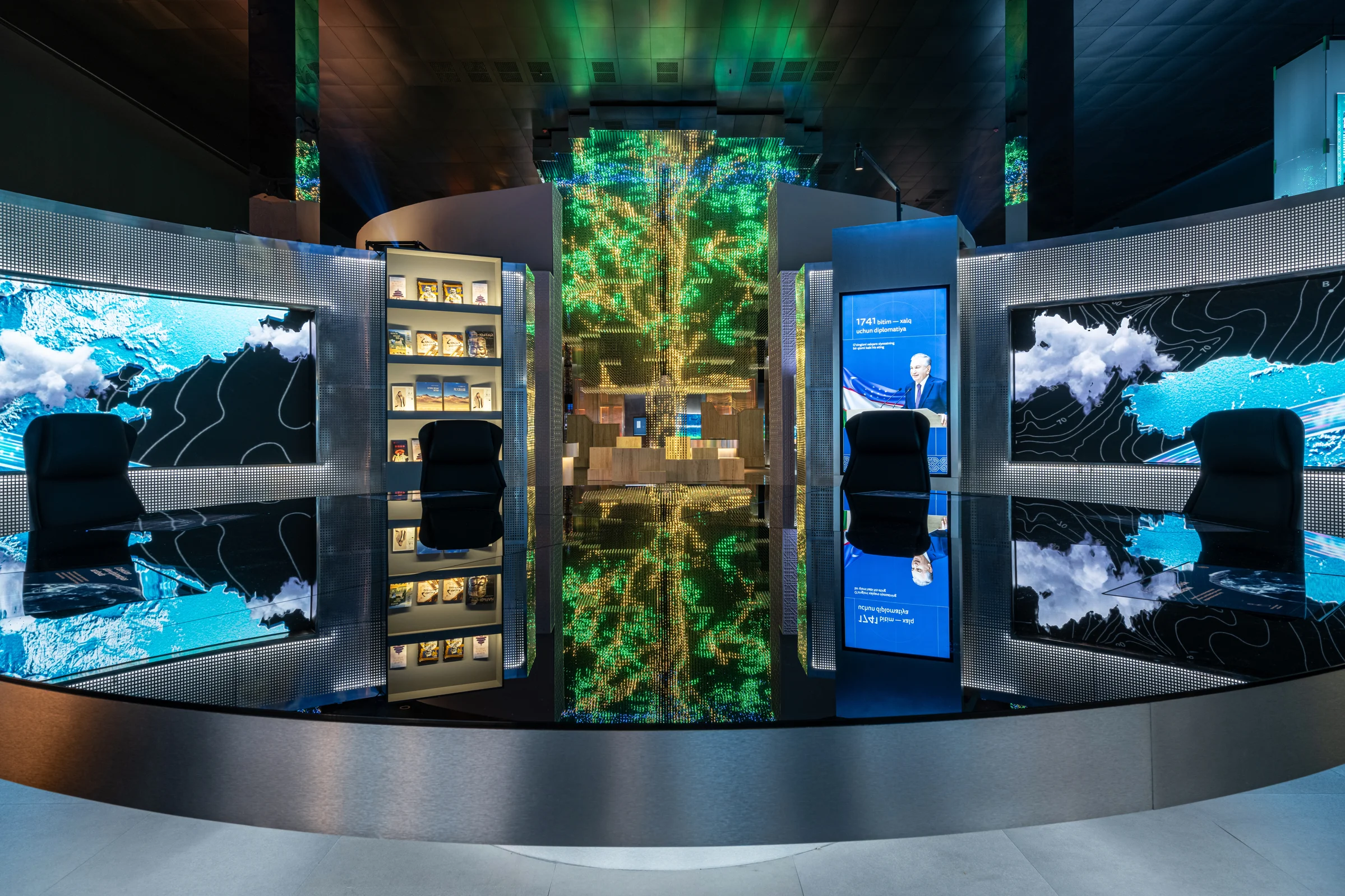
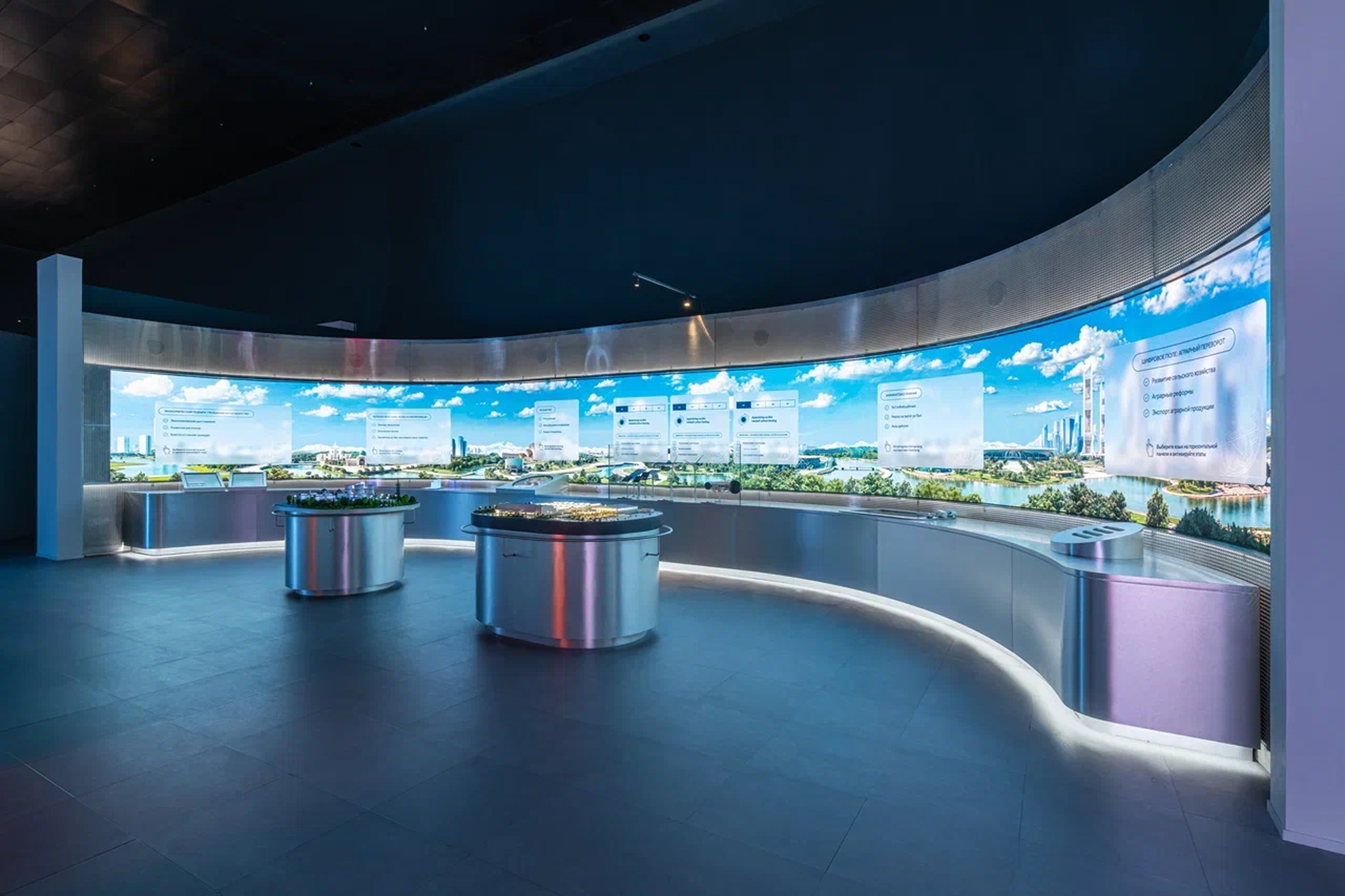
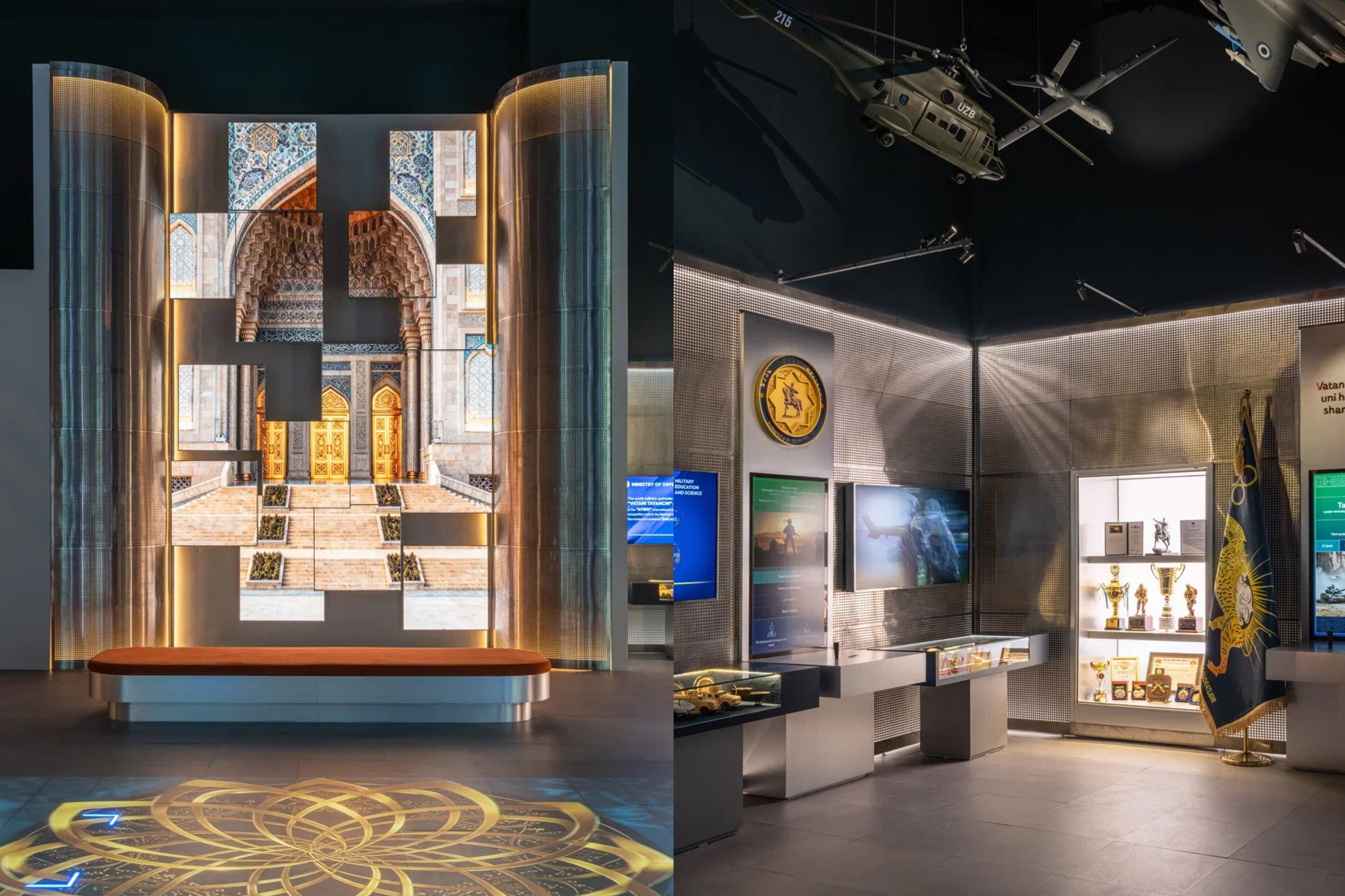
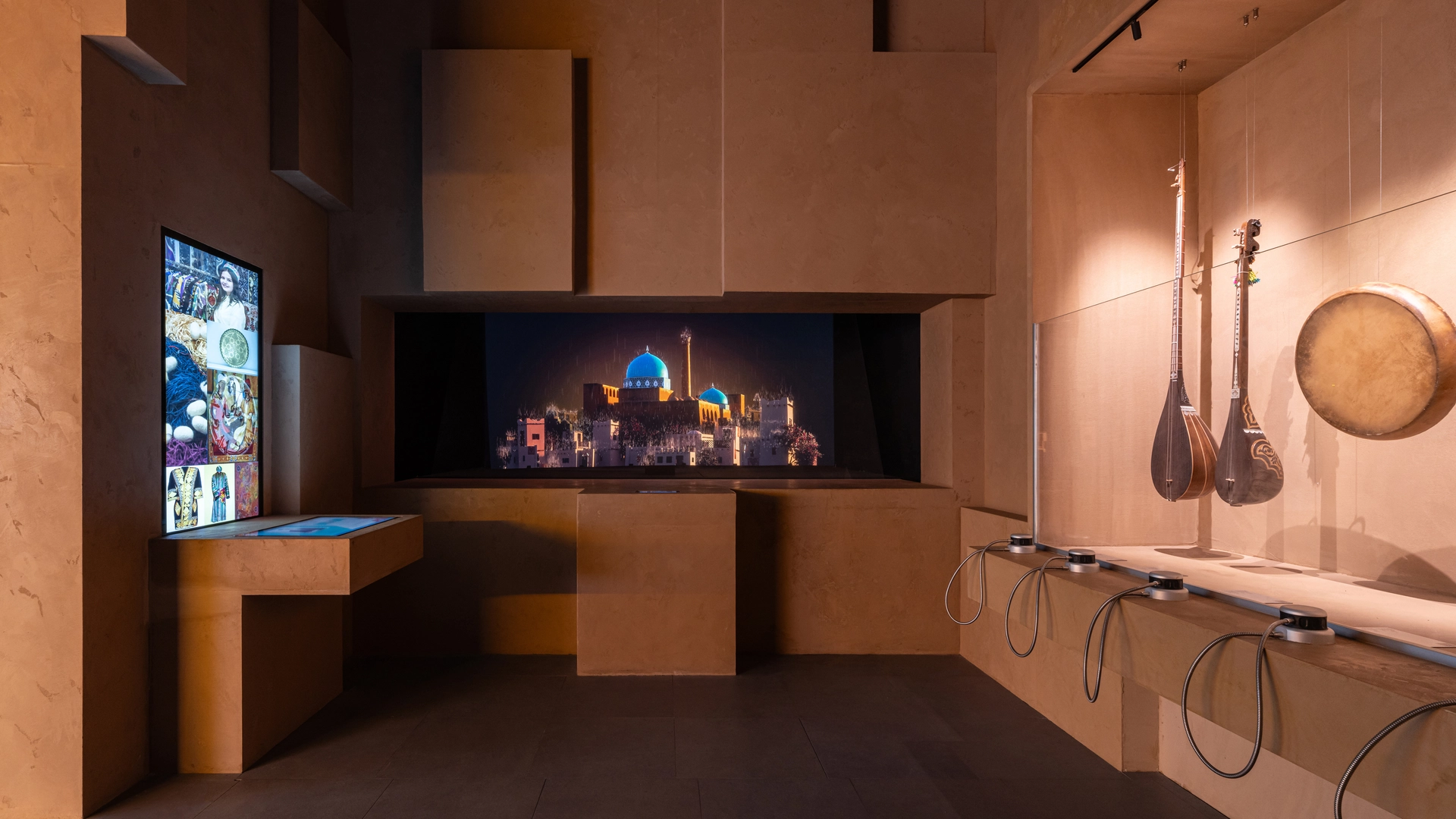
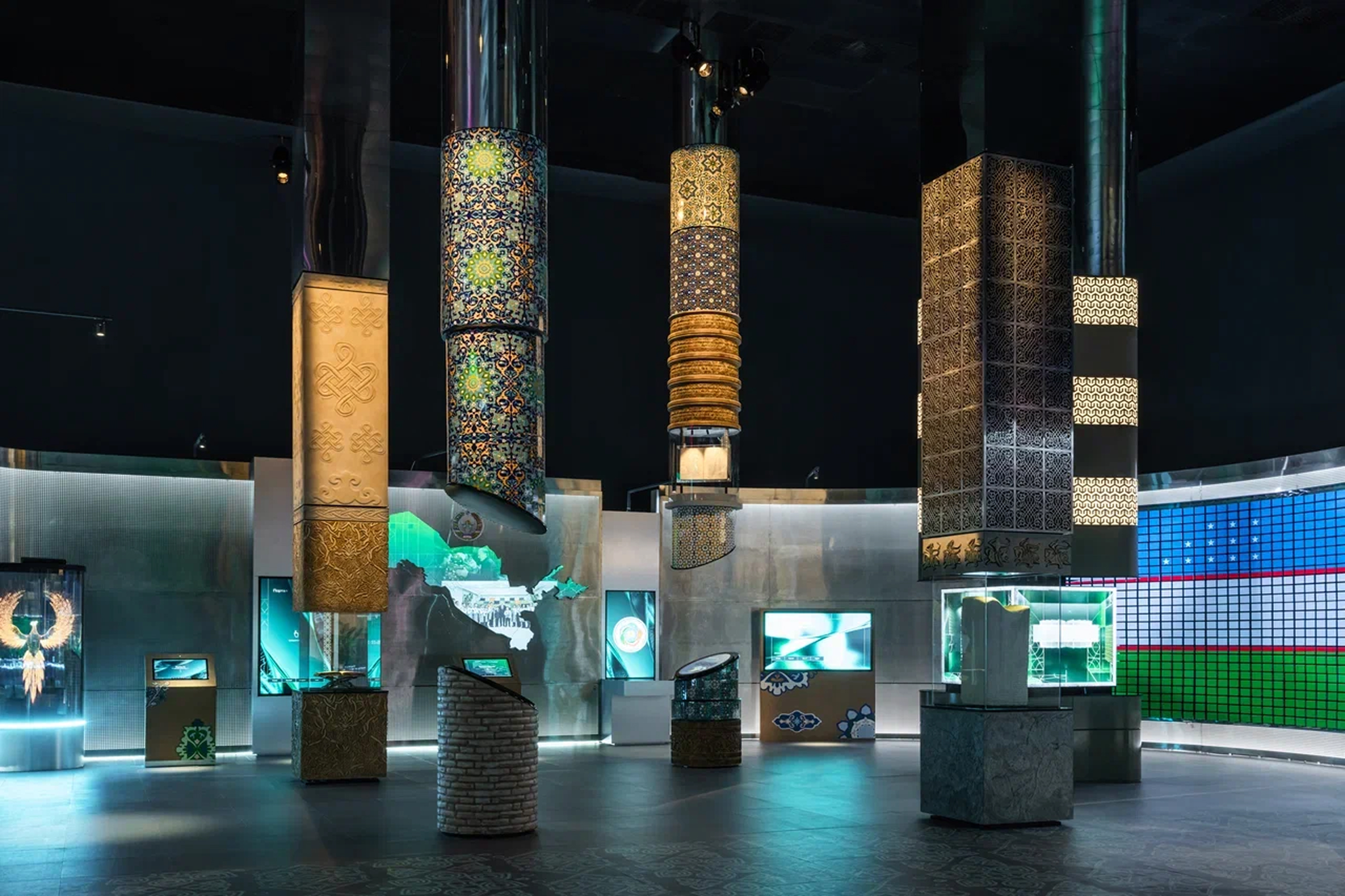
End-to-End Exhibition Delivery
— Design and engineering. We developed the exhibition concept and produced a complete set of documentation for eight exhibition zones, including architectural, engineering, structural, multimedia and lighting solutions.
— Production and implementation. We organized the production and delivery of the exhibition, creating more than 250 pieces of content and 66 interactive and multimedia installations.
— Equipment and commissioning. We supplied multimedia and lighting equipment and carried out installation supervision, commissioning, system configuration and testing.
— Project management. We coordinated an international team and delivered the entire project in 7.5 months.
m² of exhibition space
thematic zones
multimedia and interactive installations
pieces of content
The Future as an Ongoing Process
Unlike the Center's historical galleries, whose narratives are rooted in artifacts from the past, this exhibition presents a vision of the country's future as it takes shape today.
The visitors themselves become the authors of that future. Dozens of interactive applications invite them to take on new roles: launch a venture in the Build Your Own Business simulation or embark on a virtual journey across the country.
Visitors do not simply observe the future — they help create it.
The Entire Exhibition in One Minute
Exhibition Architecture and Design
The exhibition brings together eight themes, ranging from social policy and the economy to culture, tourism and sport.
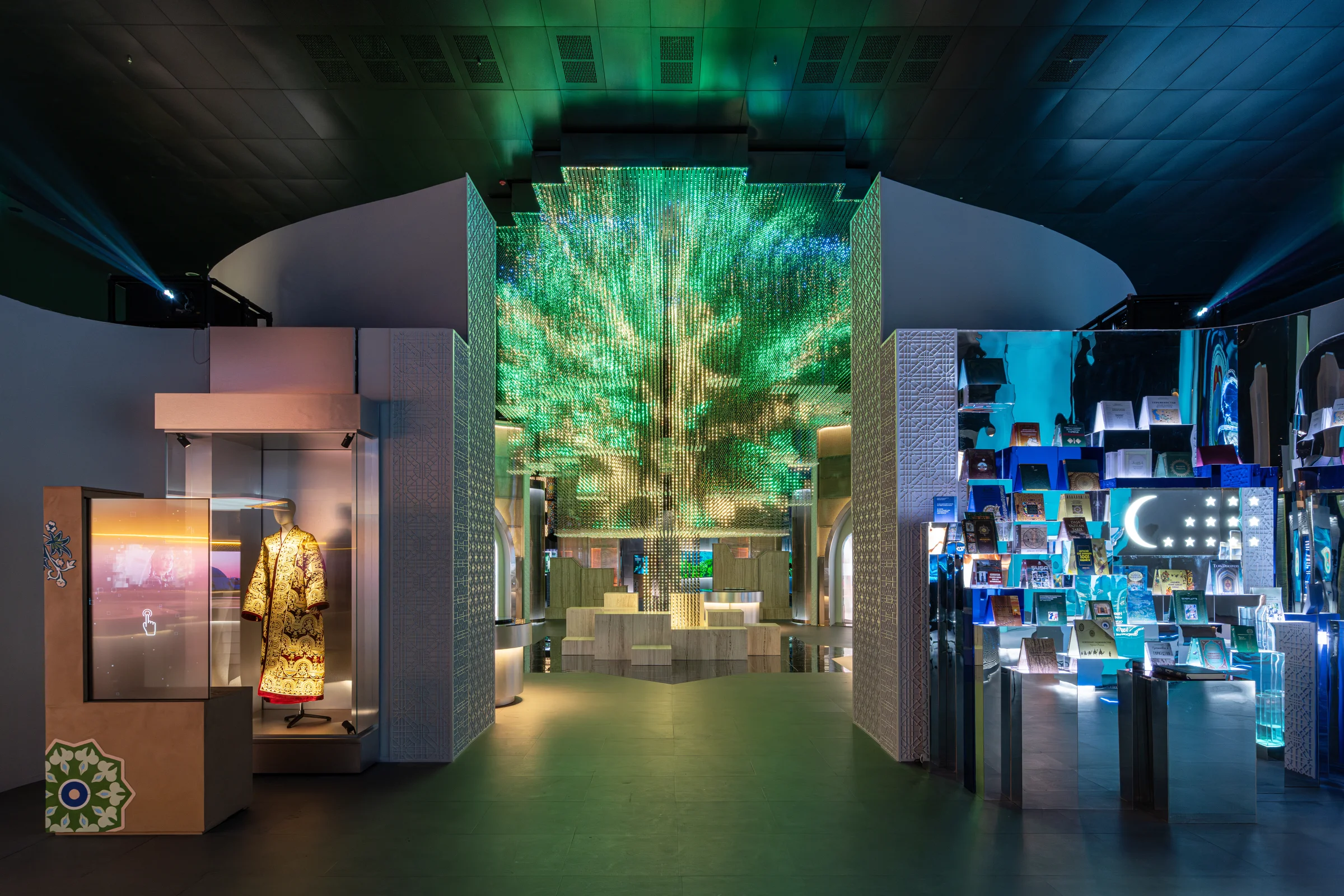
They are connected through a unified minimalist environment: a continuous spatial landscape in which each subject develops its own distinct character.
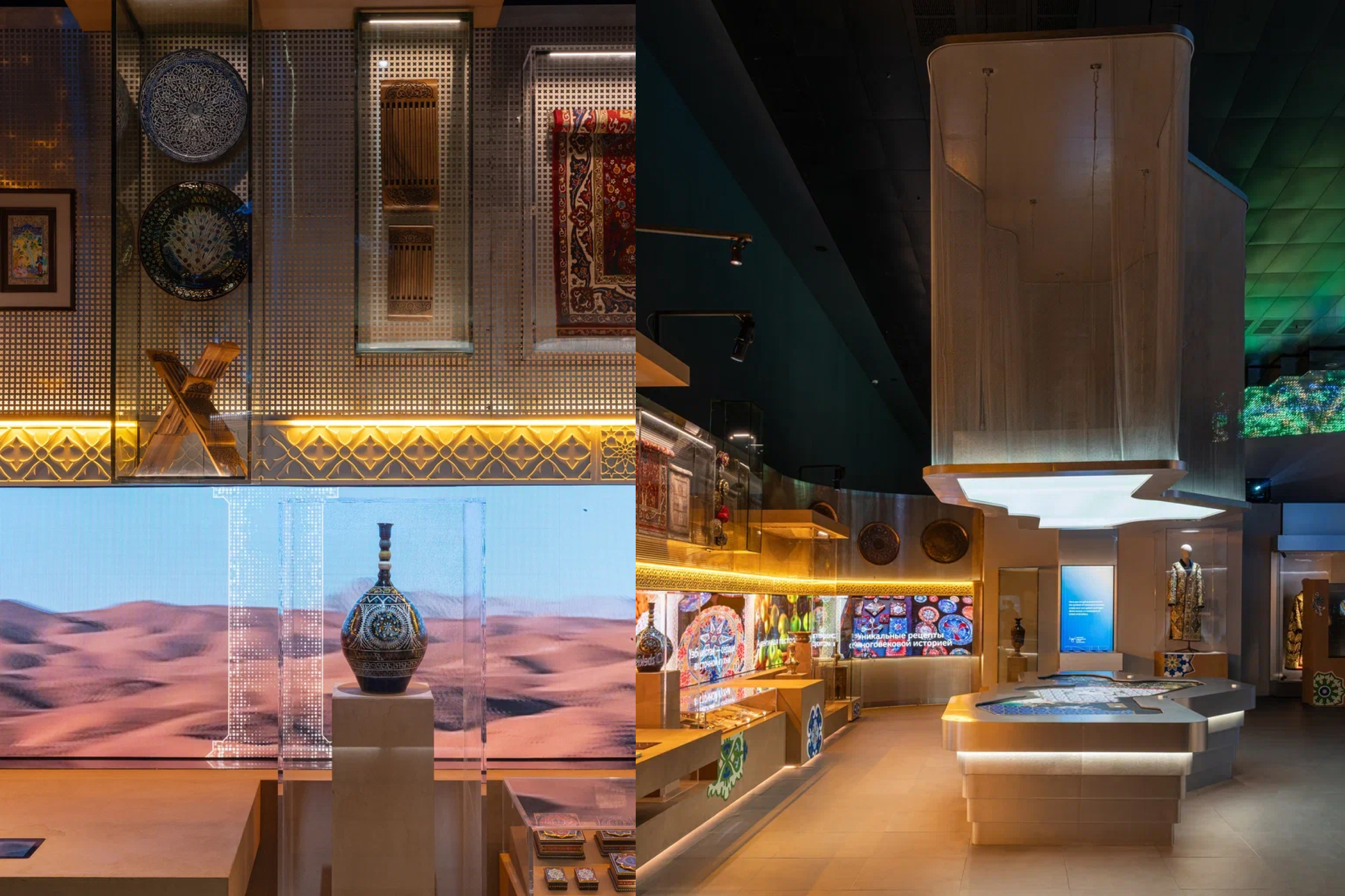
This idea informed the exhibition's curved geometry. Radial walls, visual axes and open sightlines allow visitors to see several zones at once, making the gallery legible as a single composition. Dense exhibition clusters alternate with open spaces, establishing a clear rhythm of movement.
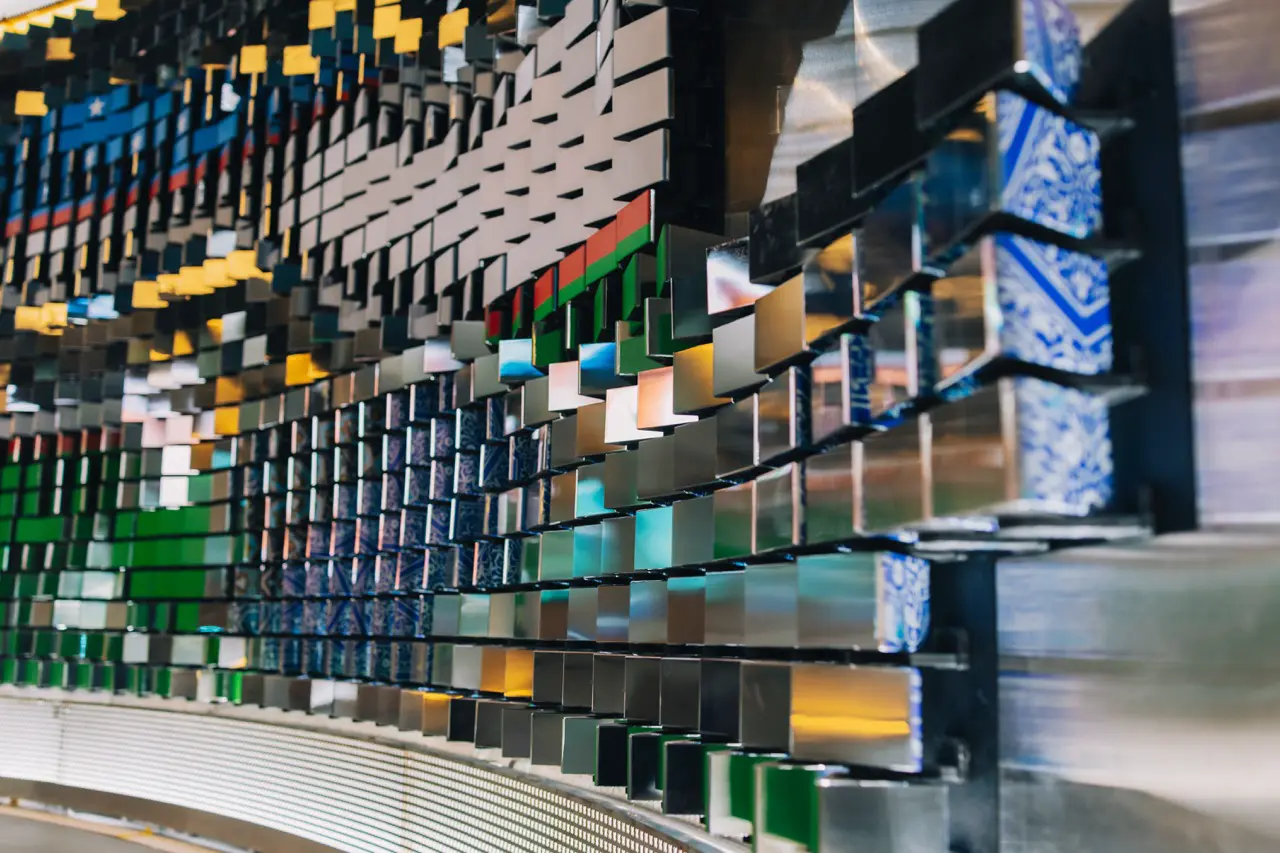
Mahalla arches frame media screens featuring personal stories, while the traditional girih pattern, translated into metal mesh structures, comes alive through light and motion. Traditional forms and contemporary content operate as a single system.
Technology as the Language of the Exhibition
The exhibition is designed as a rich multimedia environment in which each installation creates a different kind of visitor experience.
Panoramic LED screens and spatial projections communicate large-scale narratives. Touch interfaces, RFID tags and interactive tables support individual exploration. Volumetric, holographic and kinetic installations create a heightened sense of presence.
In one zone, visitors explore maps and travel routes. In another, they create a national ornament, launch a business scenario, interact with residents of a mahalla or embark on a virtual journey across the country.
Complex subjects — including the economy, social policy and international relations — are transformed into clear, personal experiences. Visitors do not merely observe: they choose their own path through the exhibition.
The Volumetric Tree and Seven Mahalla Arches
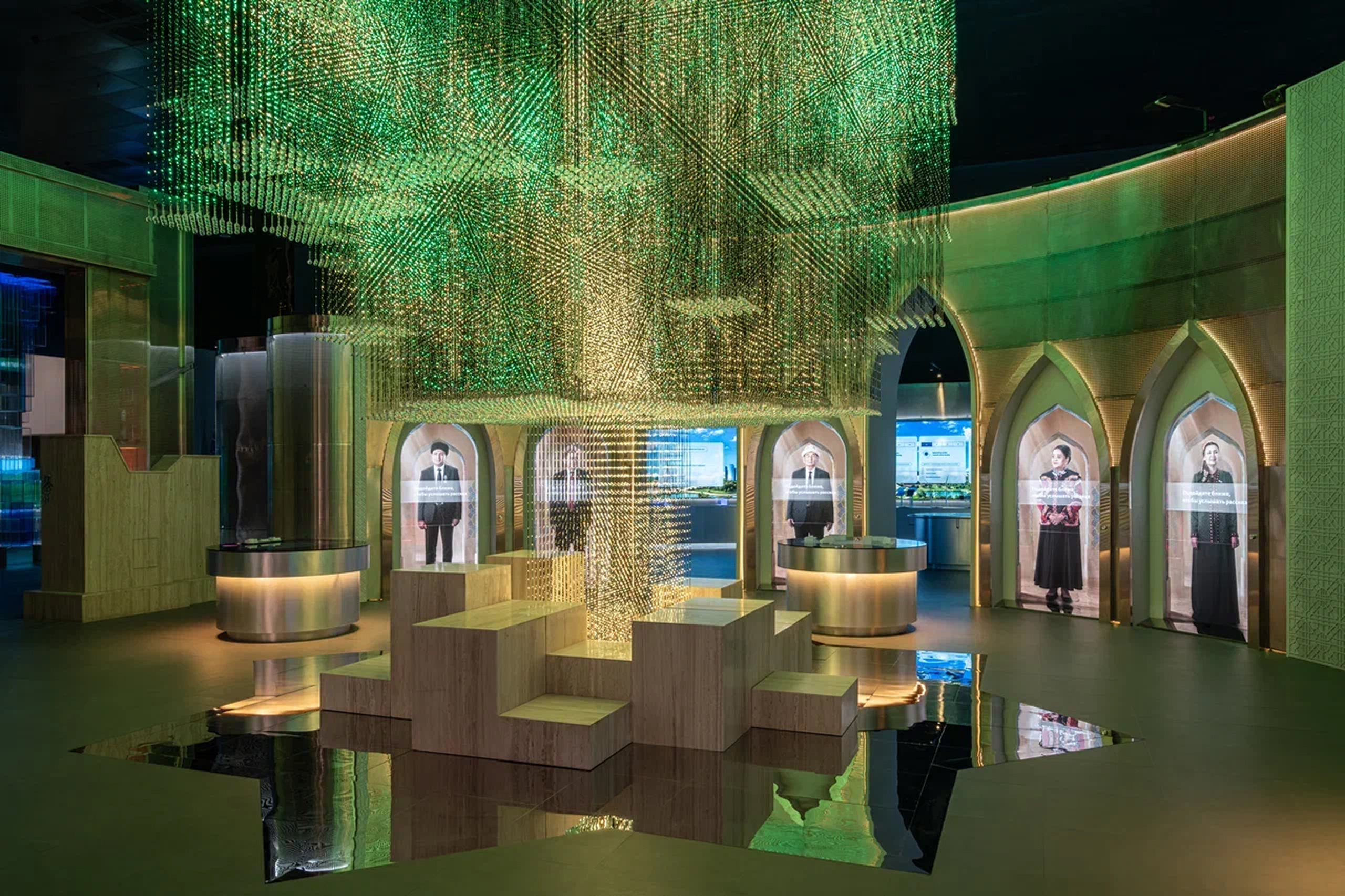
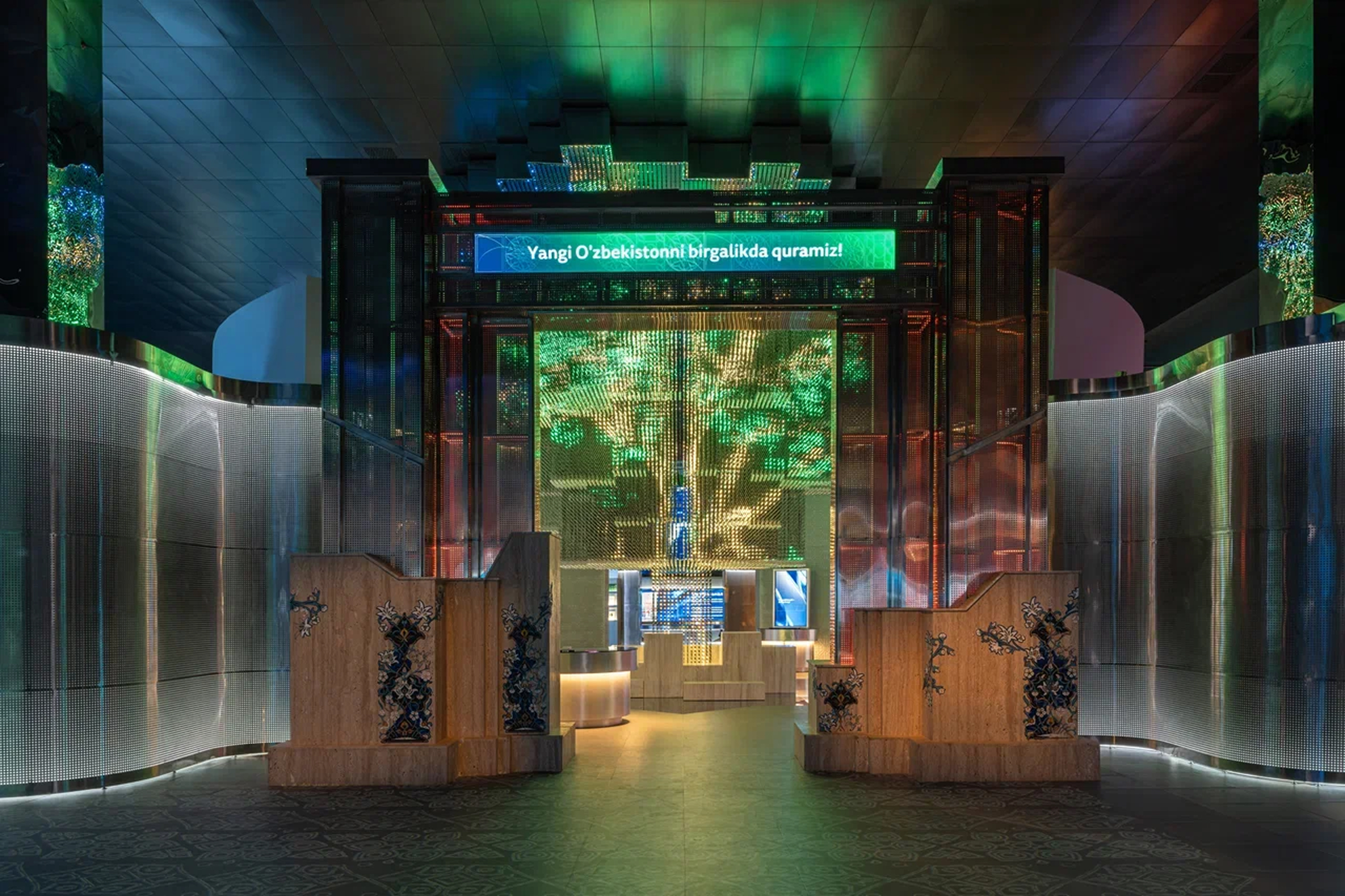
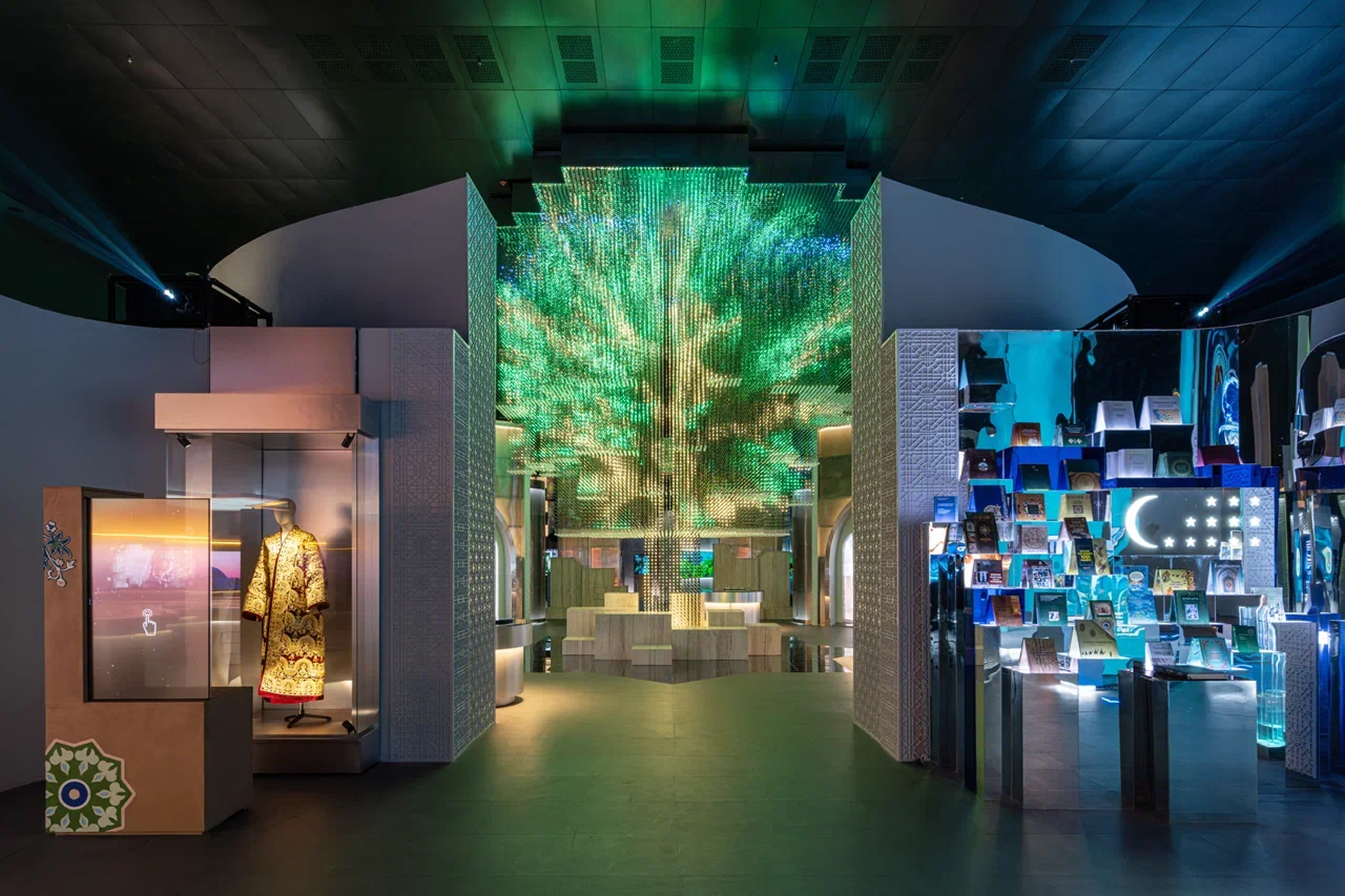
The conceptual heart of the zone is the mahalla — a traditional neighborhood community and an important form of social life in Uzbekistan.
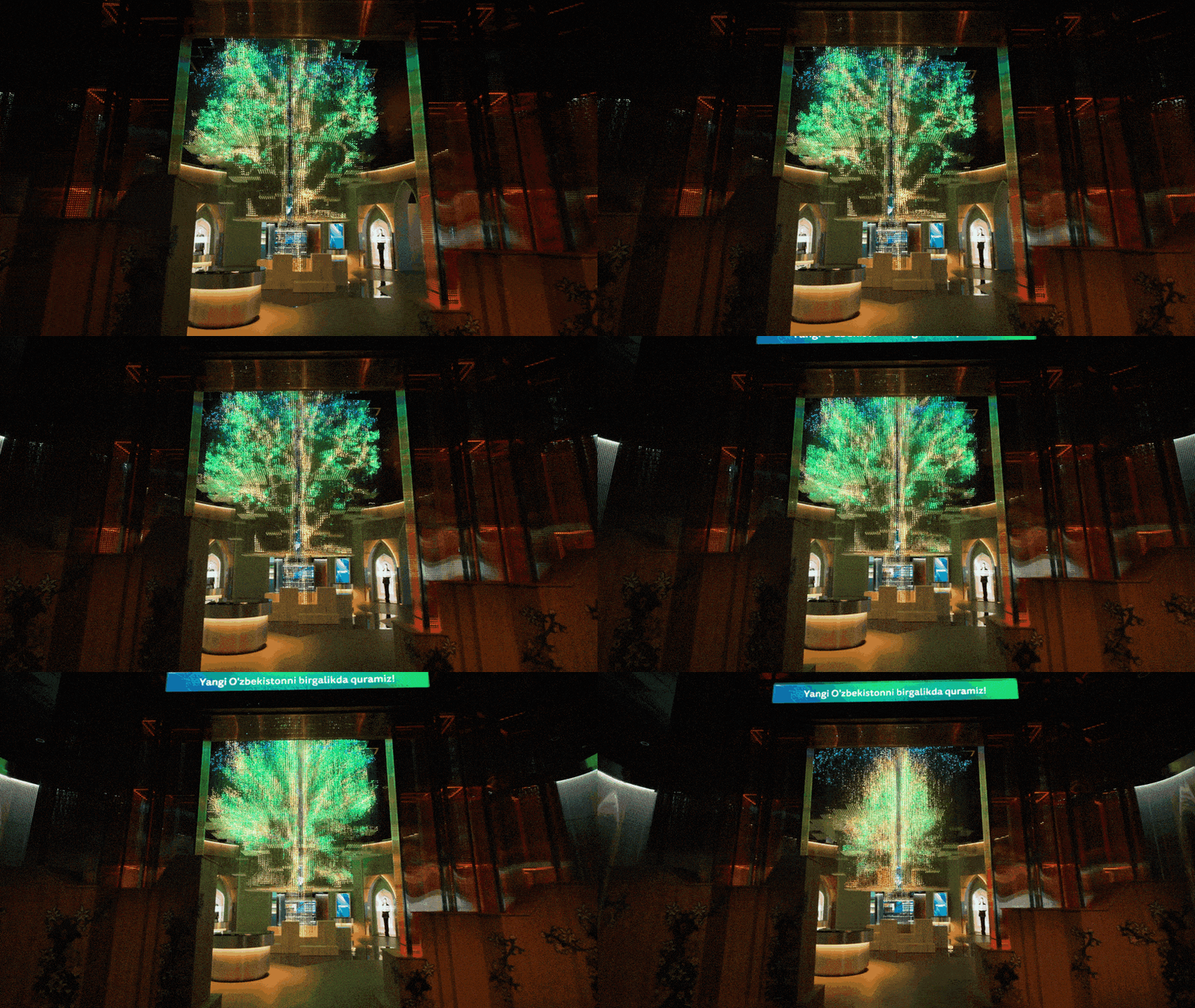
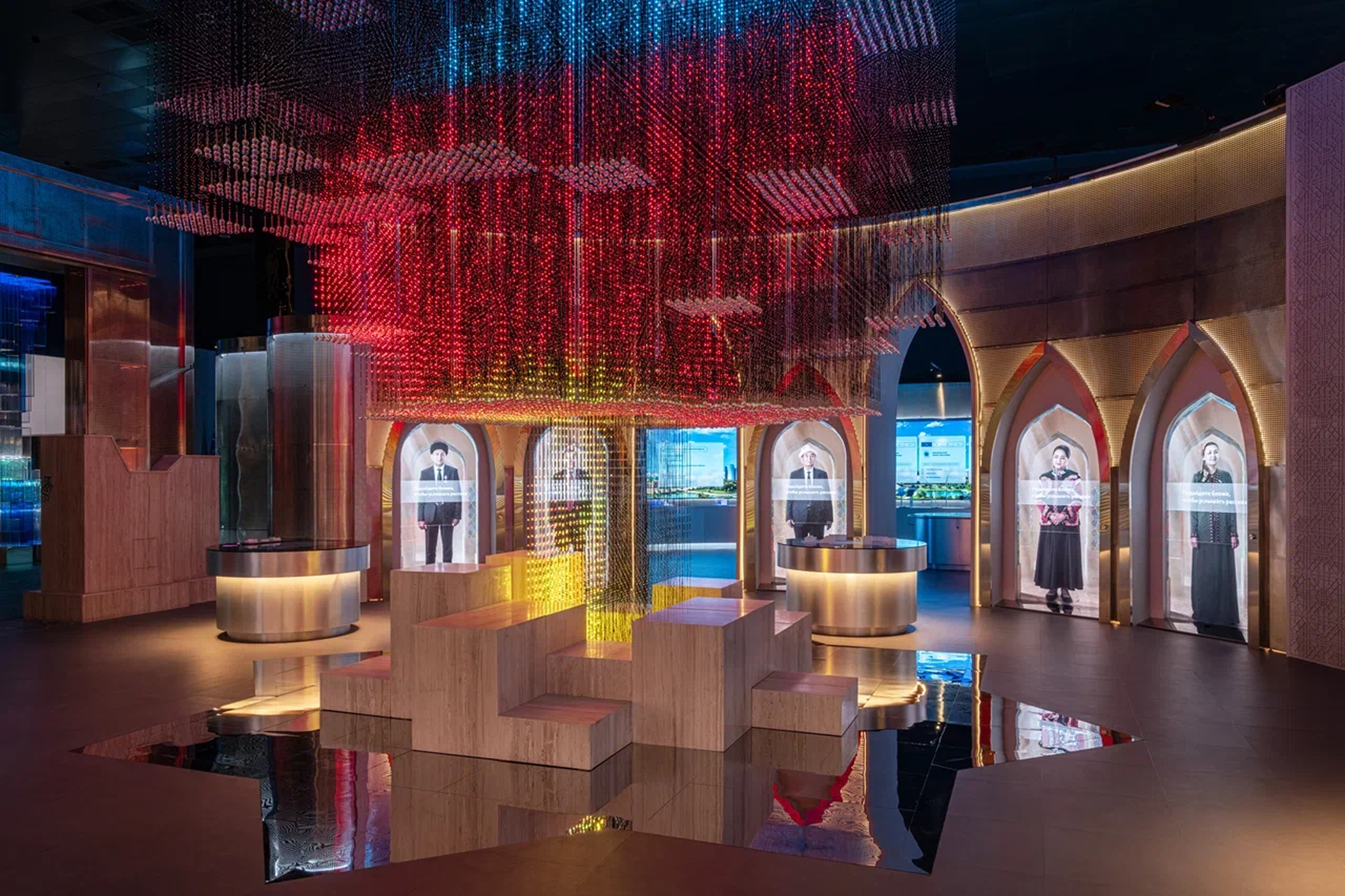
At the center of the space stands a volumetric tree symbolizing fertility and collective strength. Through light and animated content, its image continually transforms: at one moment it appears as a tree, and at another as the Humo bird, Uzbekistan's national symbol of happiness and freedom.
This is the first time volumetric technology has been used at this scale in Central Asia.
Seven arches surround the tree, representing the seven pillars of the community. Each arch introduces a different person: a mahalla chairperson, a community activist, a healthcare professional or a social worker.
Real people share their personal stories through media screens, with each story revealing one aspect of the country's reforms.
The Dawn of New Uzbekistan
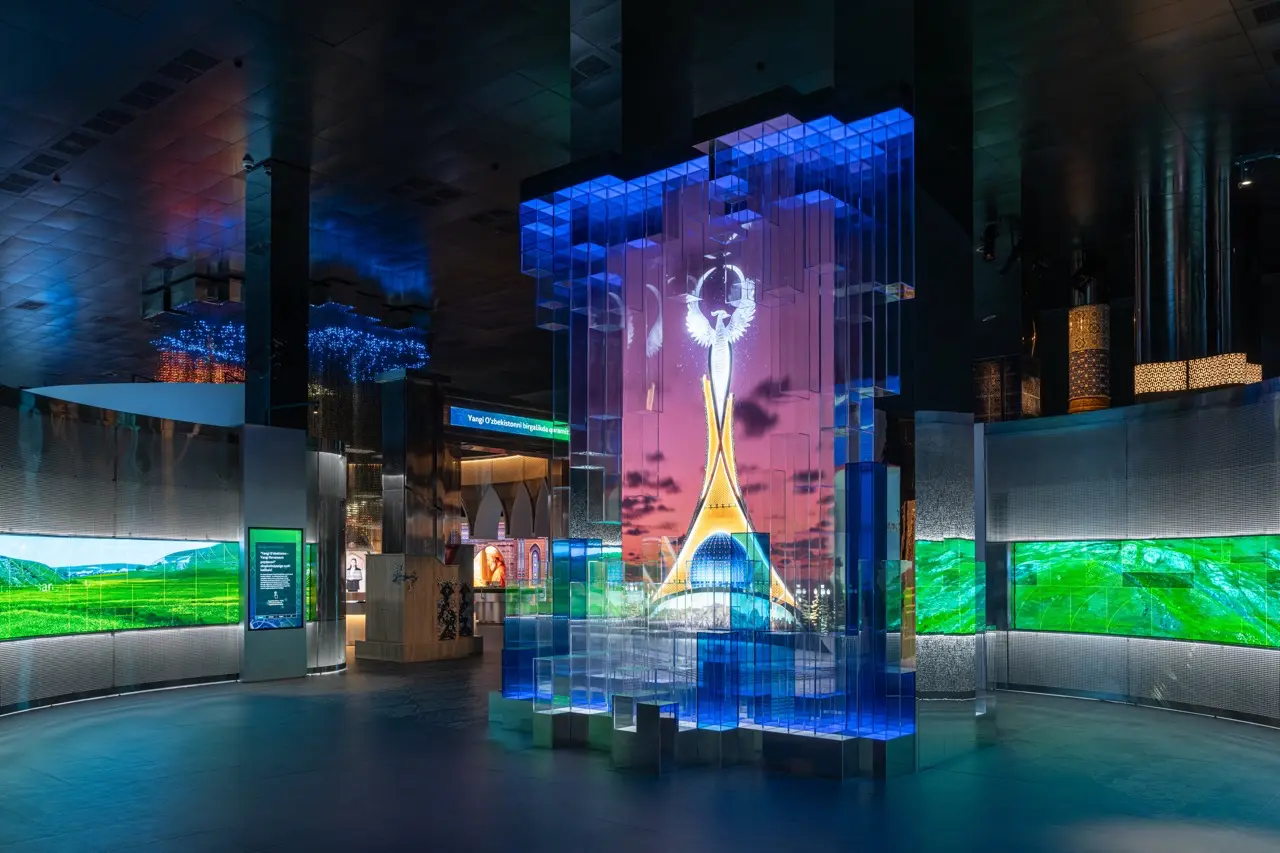
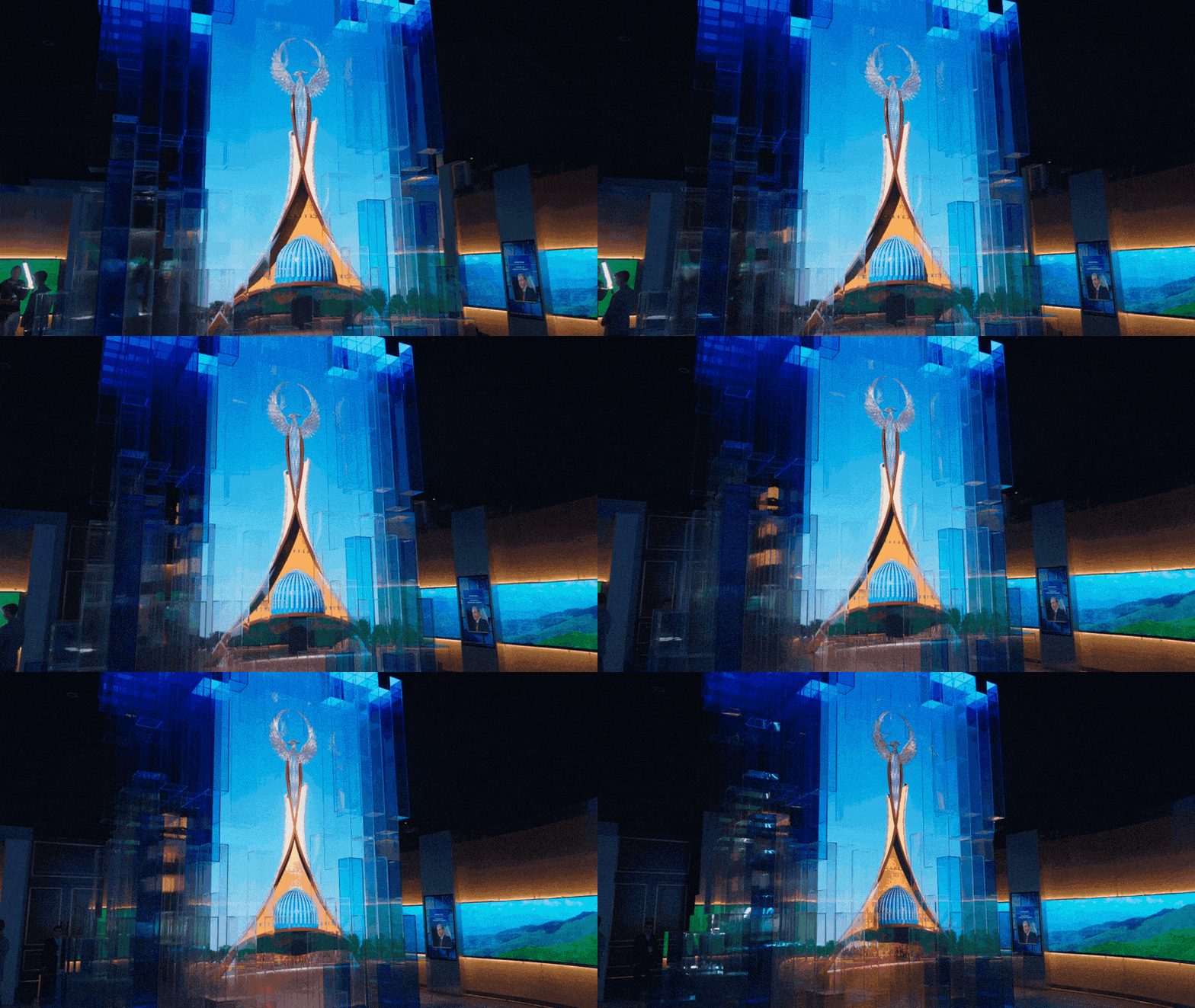
The visitor journey begins with an image of a future that is still taking shape.
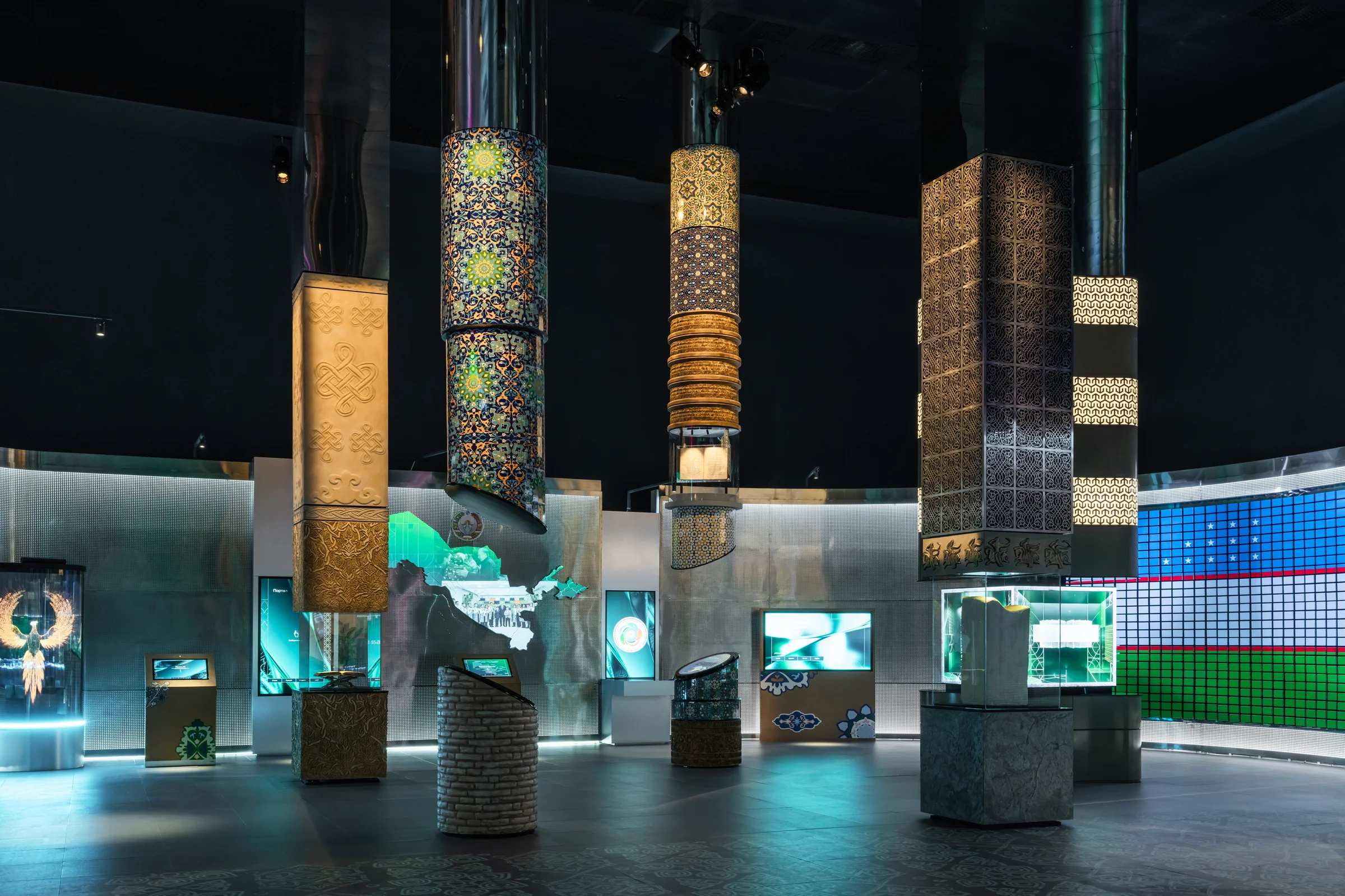
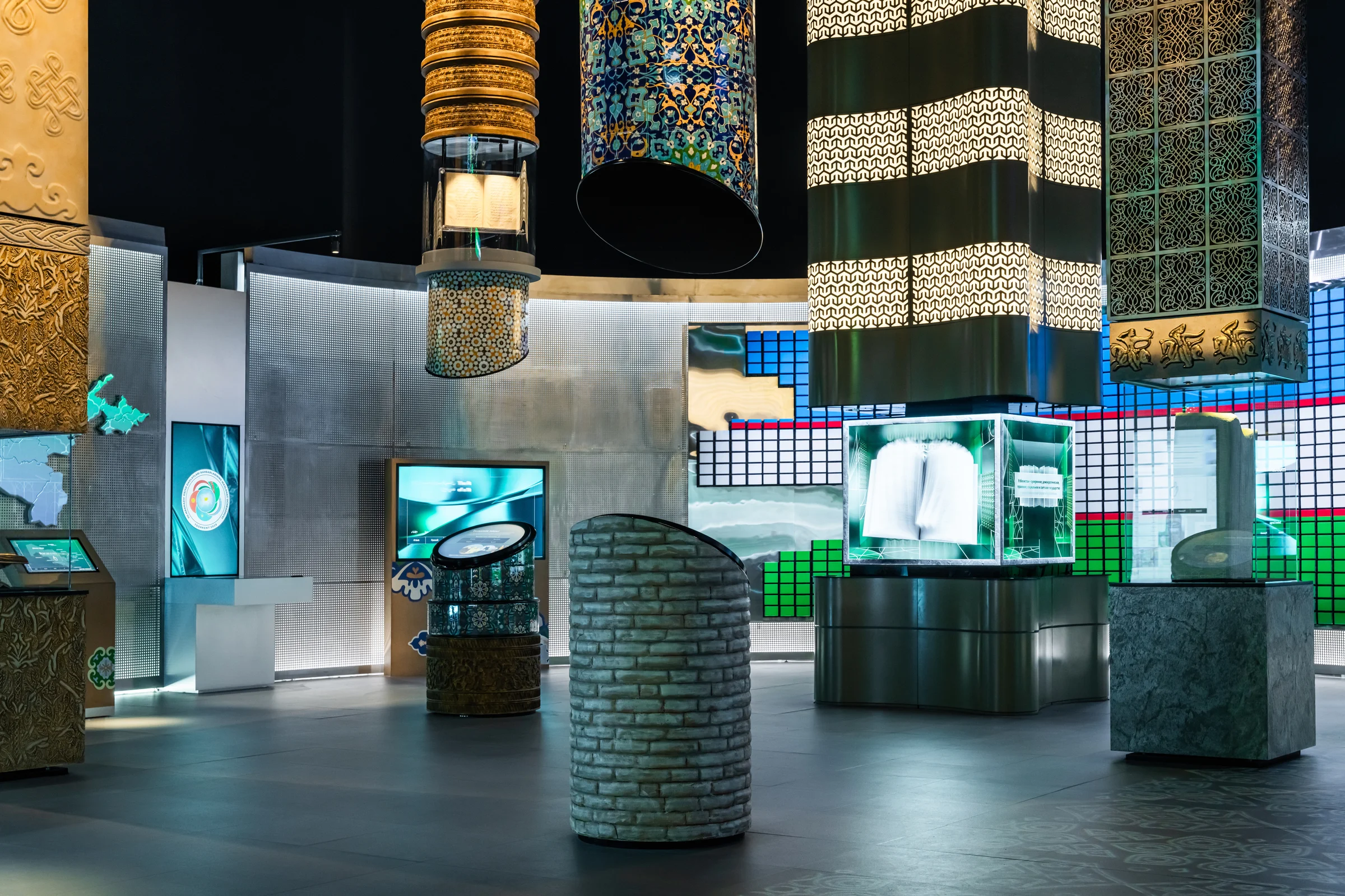
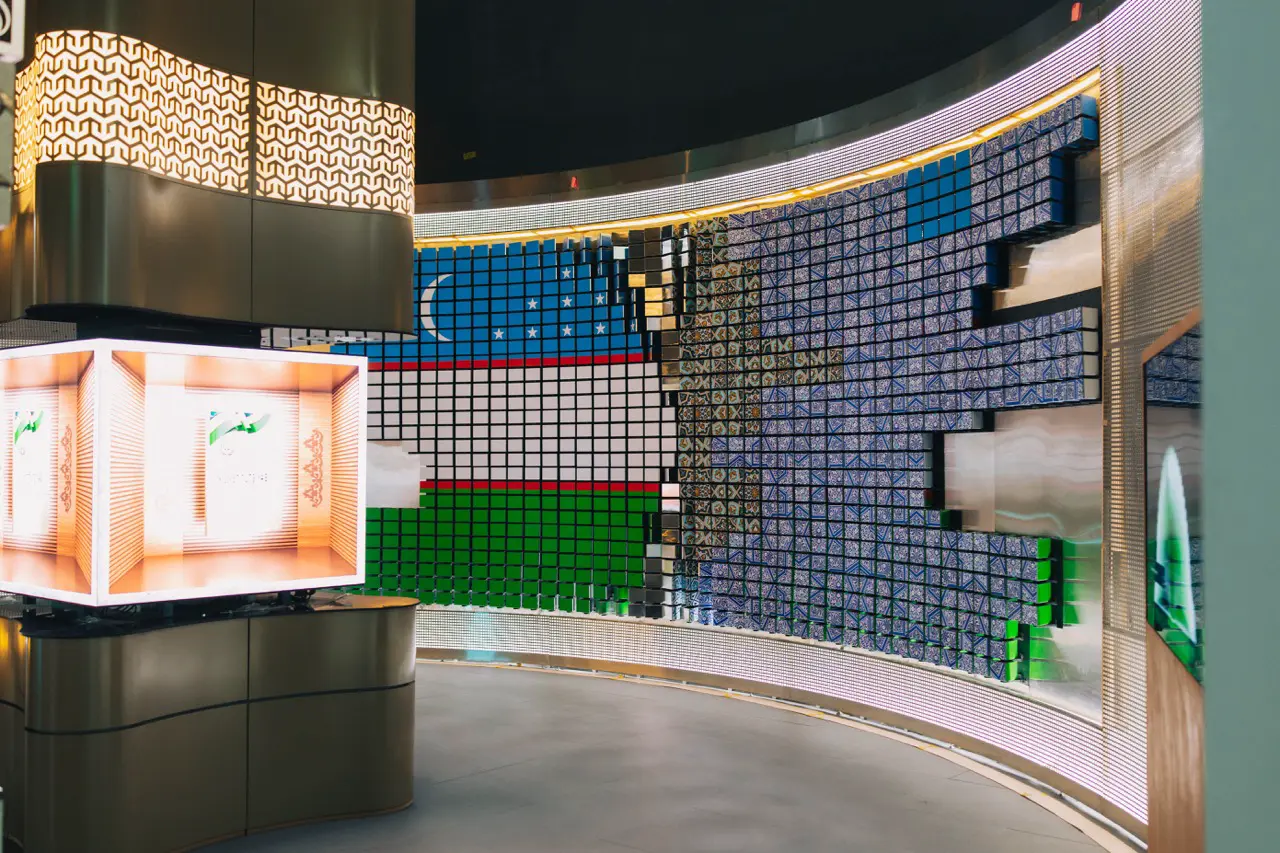
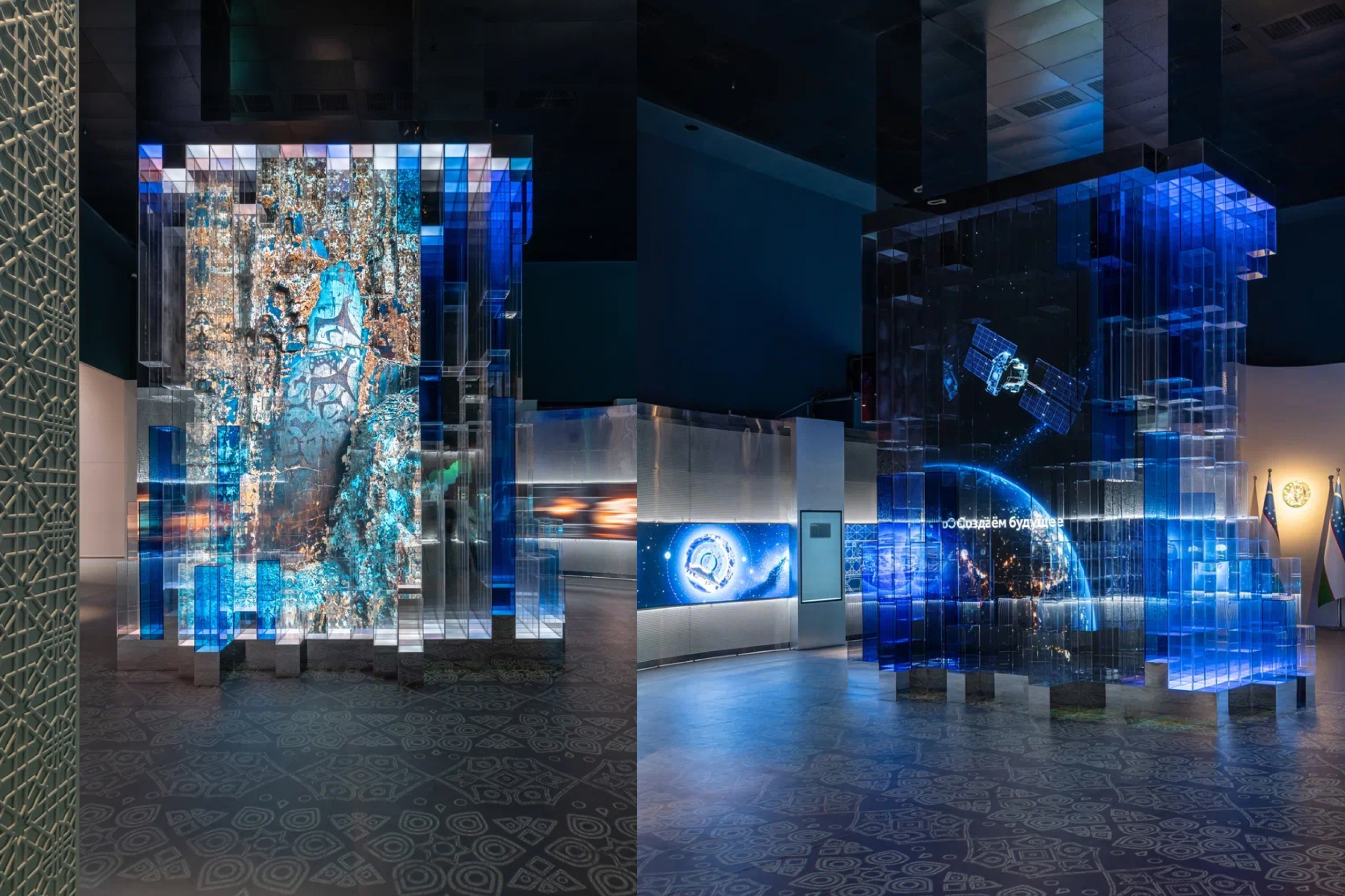
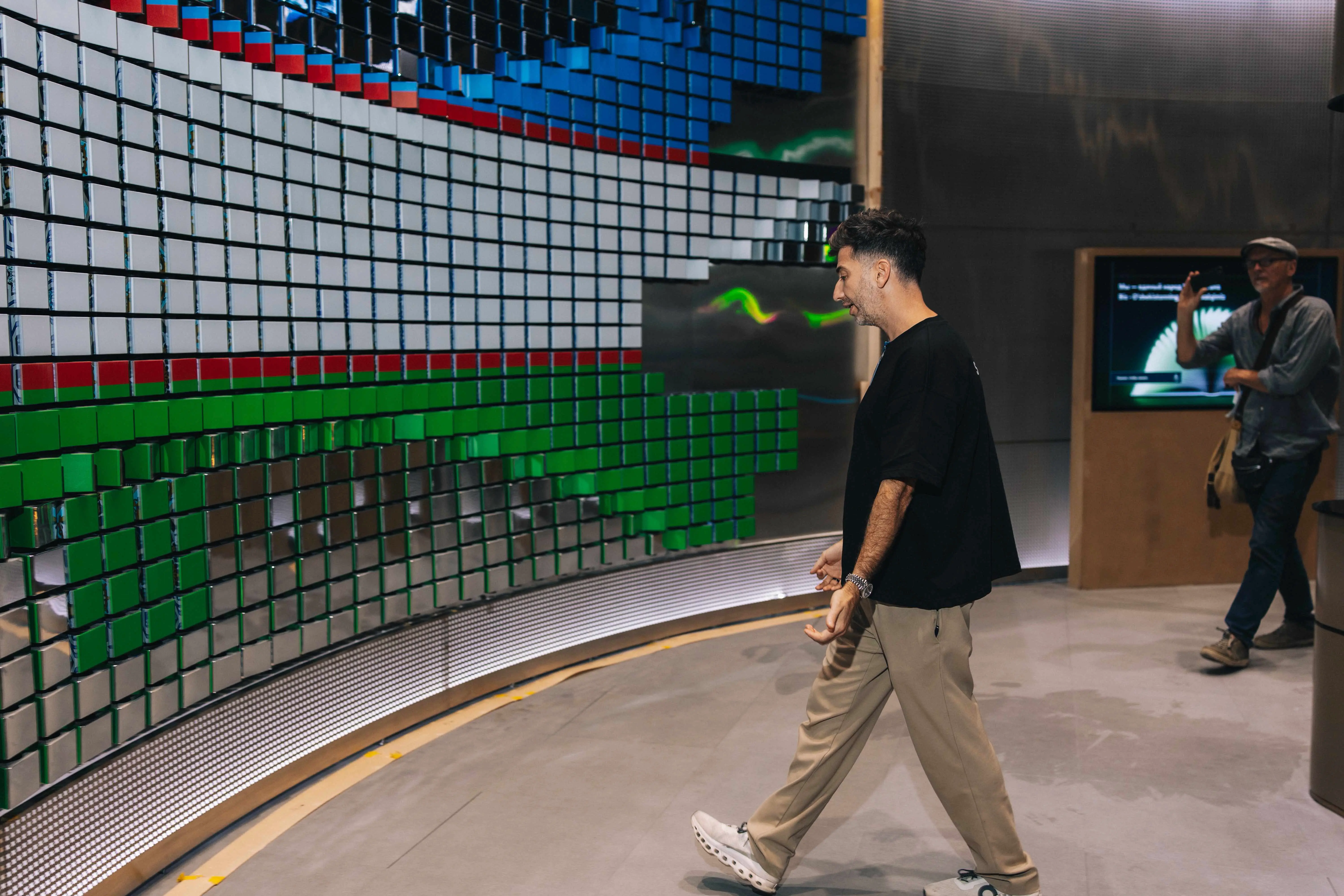
The central element is the New Uzbekistan stele, assembled from transparent acrylic cubes. Panoramic LED screens surround the installation with expansive views of the country.
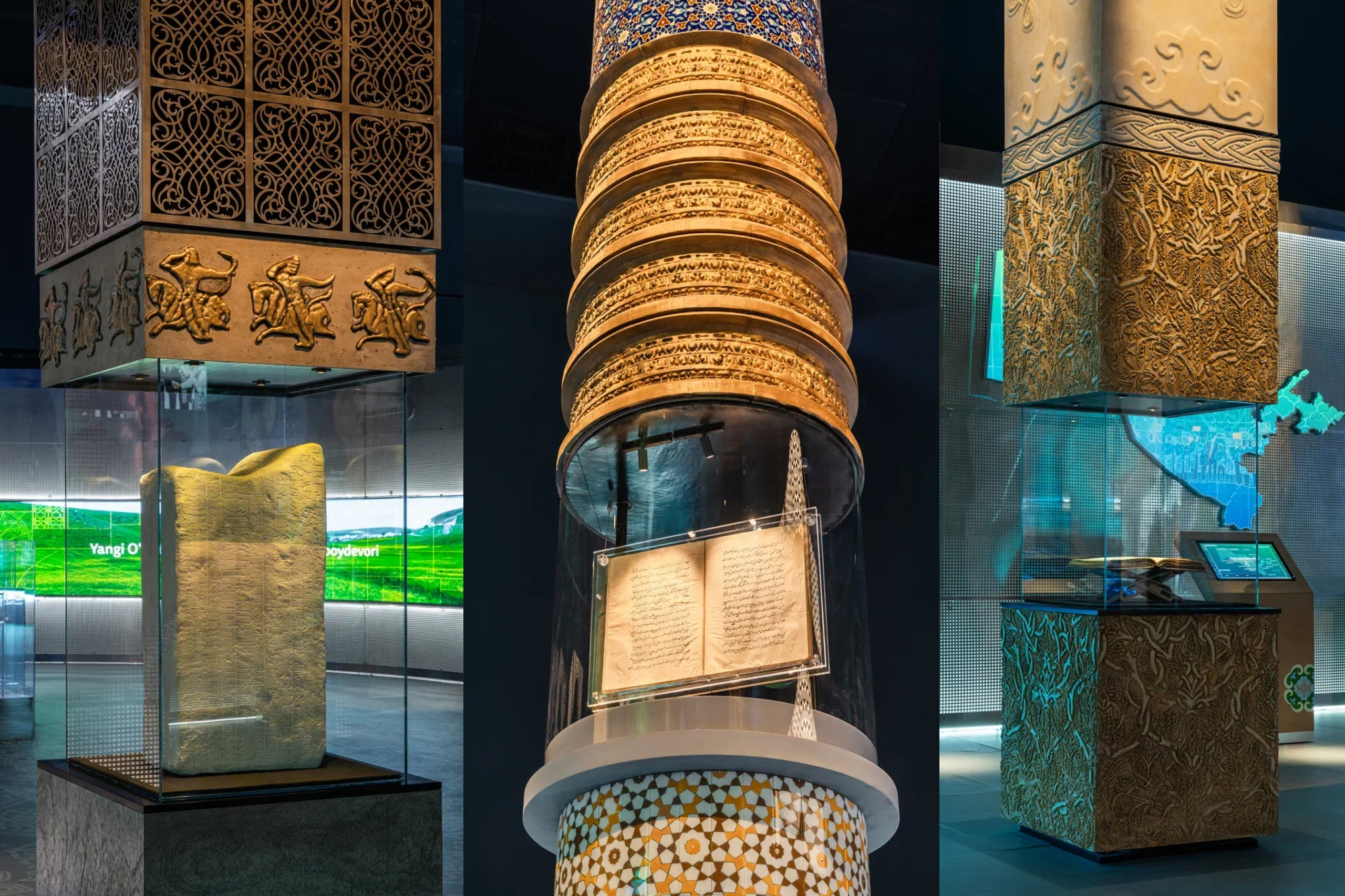
The route continues through five Columns of Statehood, presenting fifteen historical periods — from the Karakhanid era to the twentieth century.
The Negotiating Table and LED Sphere
The foreign policy zone is designed as a situation room.
Visitors take a seat at a real negotiating table with six touchscreens integrated into its surface. The Geography of Power application presents diplomatic formats, international summits and resolutions.
The screens are synchronized with a high-resolution LED sphere suspended above the table. Delivering the installation required precise engineering coordination between the custom furniture, integrated displays and the suspended three-dimensional media object.
Authentic diplomatic gifts are displayed nearby. Here, the visitor moves from the position of an observer to that of an active participant.
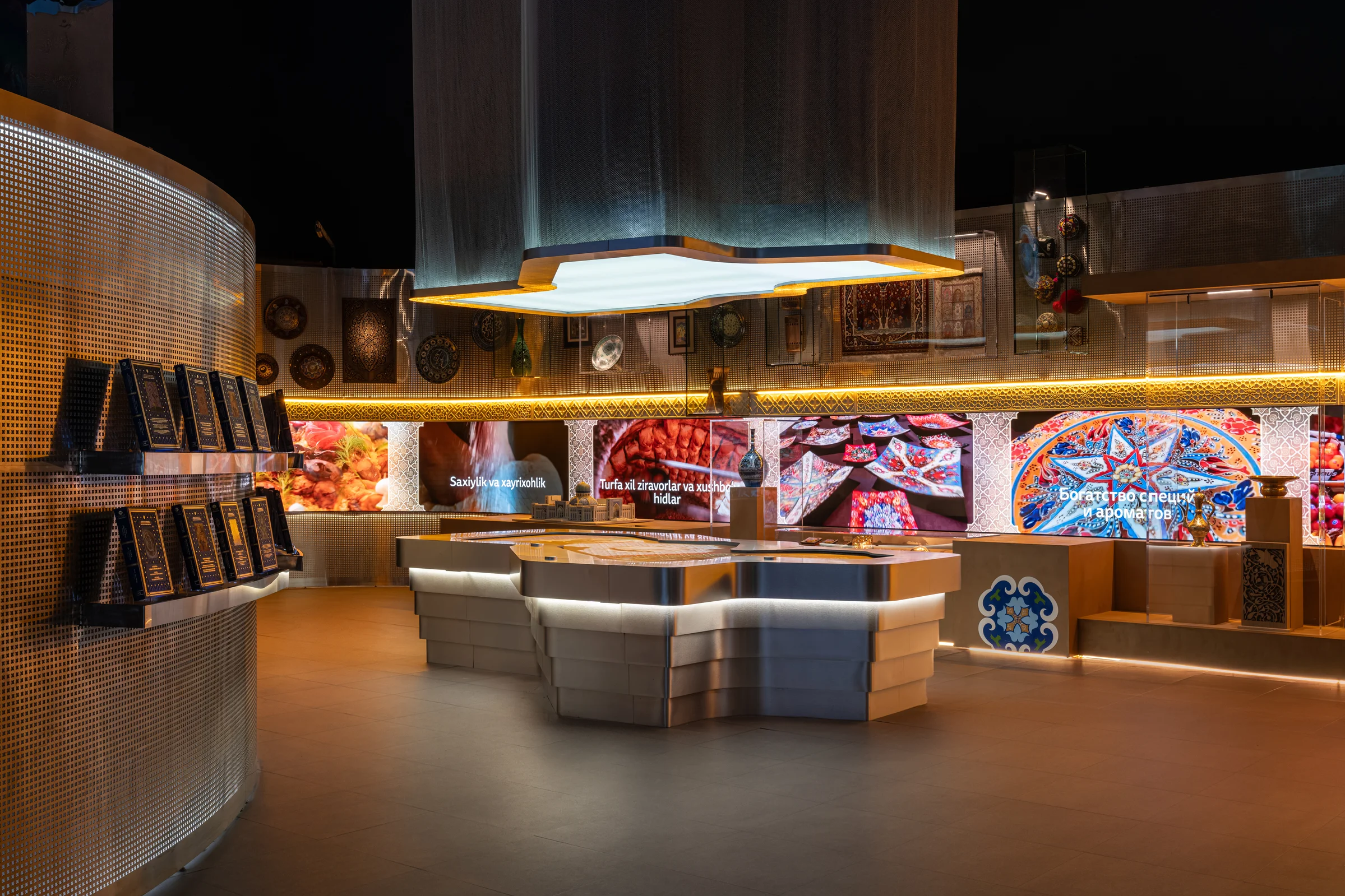
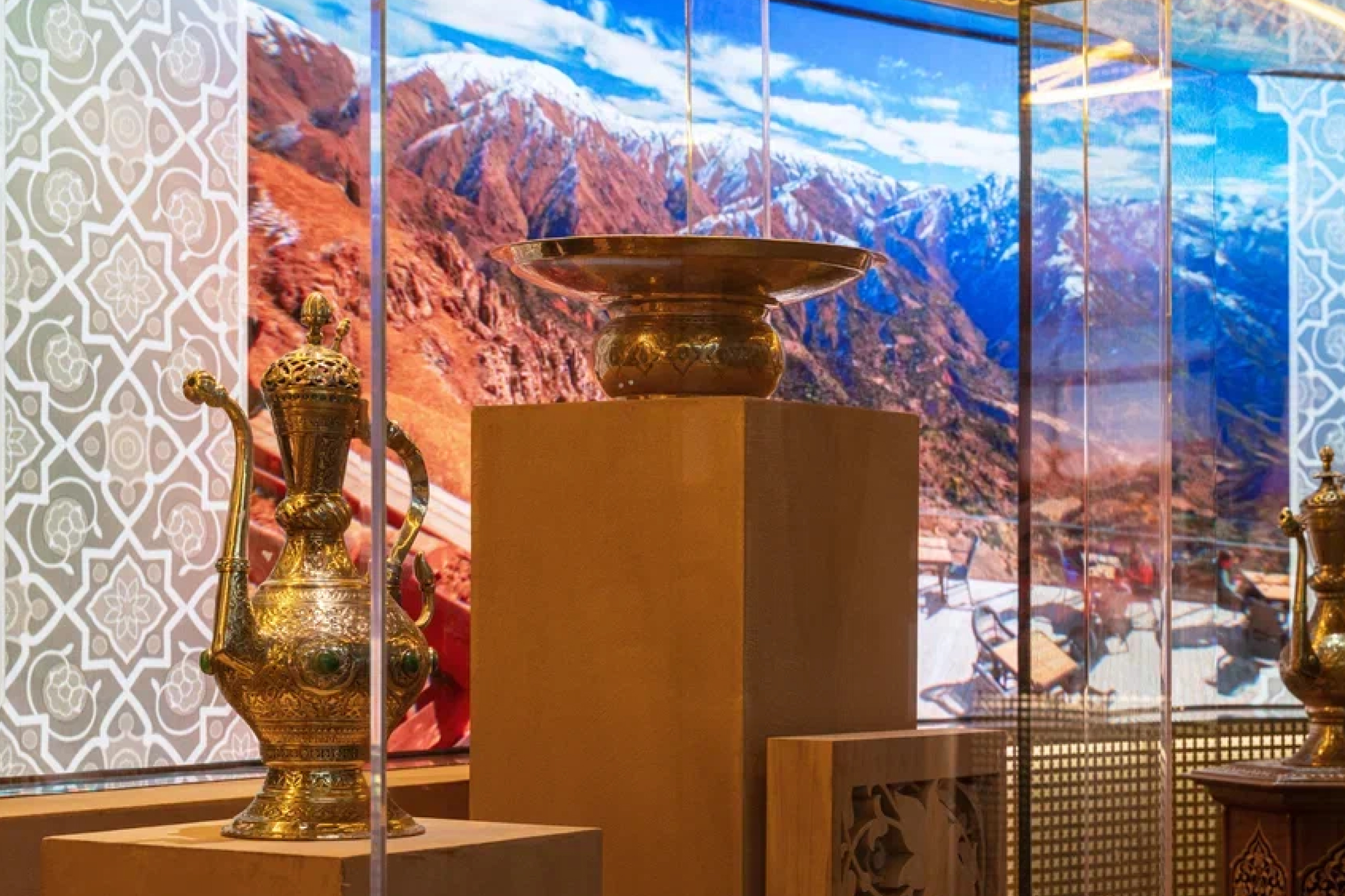
Interactive Cultural Map of Uzbekistan
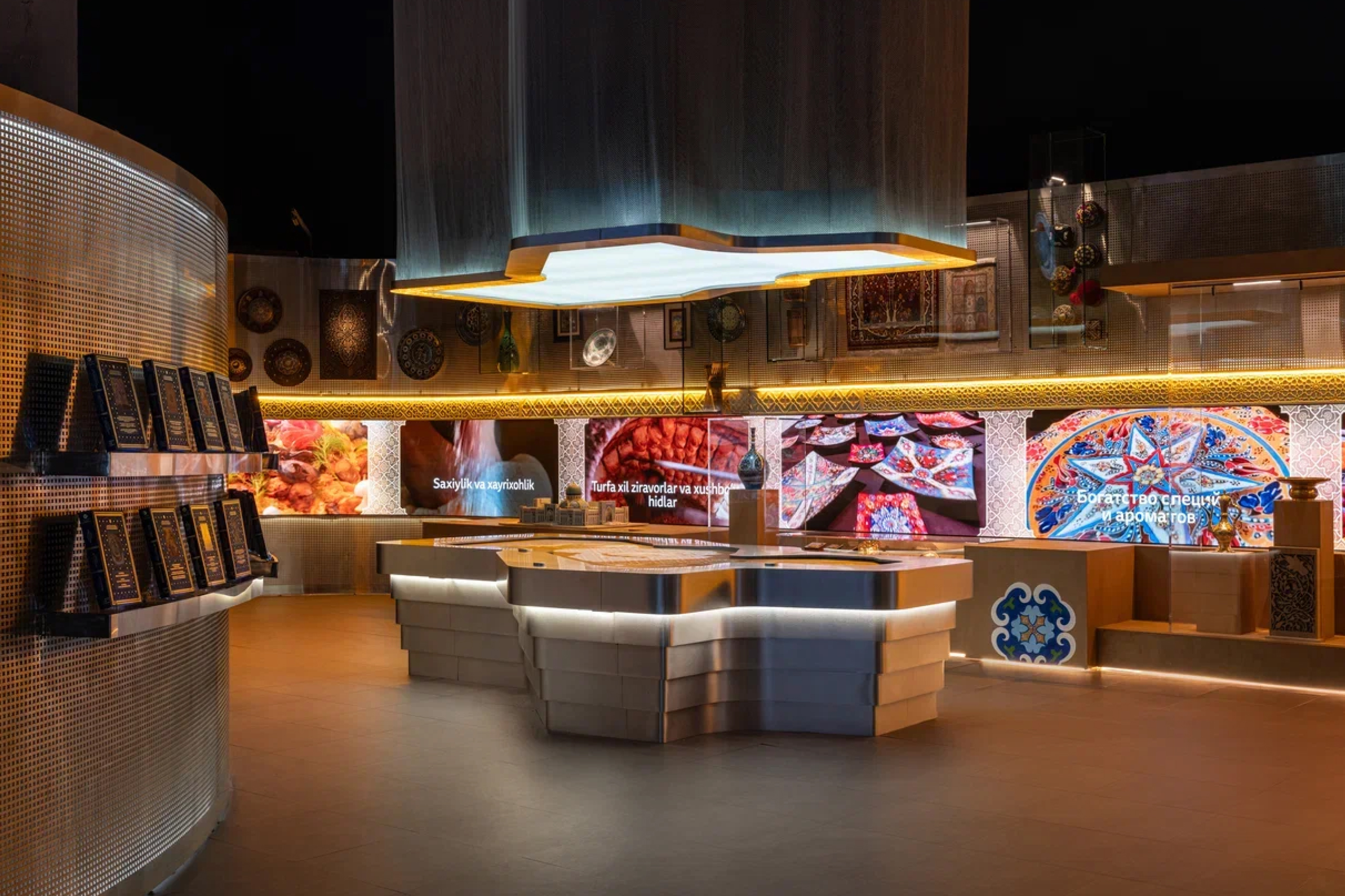
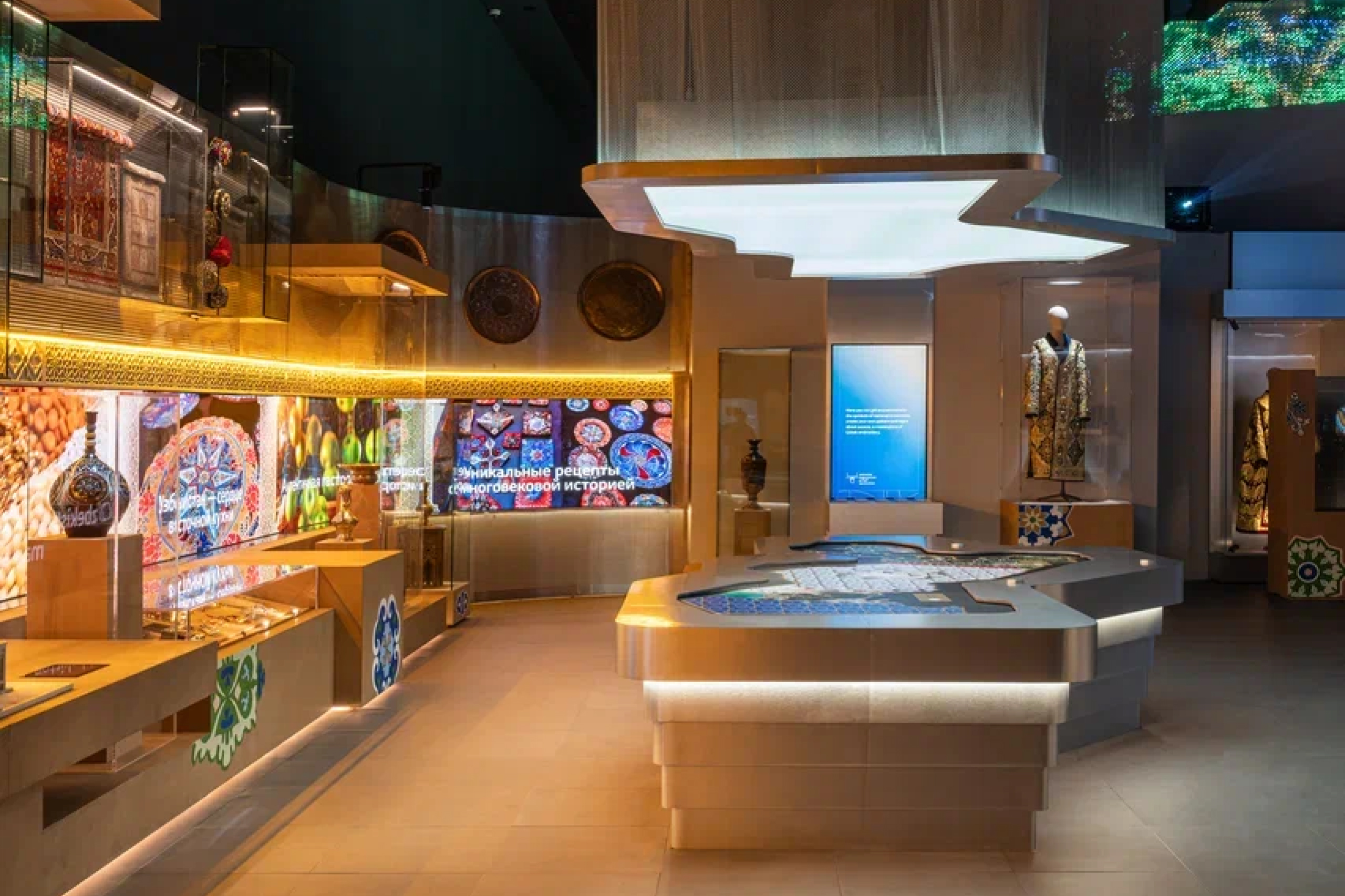
At the center of the zone is a table shaped like a map of Uzbekistan.
Its stepped metal base follows the outline of the country, while an illuminated suspended structure above repeats the same silhouette. By rotating three physical encoders, visitors travel across Uzbekistan's cultural landscape — from Khorezm to the Fergana Valley.
The exploration continues through a series of interactive experiences. Visitors can create a unique national ornament, listen to historical musical instruments through headphones and ask questions of the Heritage and Light hologram, whose AI assistant responds in real time.
Content for the Cultural Zone’s LED Screens
Multimedia Content for the Exhibition
More Than 250 Pieces of Content
Pitch created more than 250 pieces of content for the project:
— live-action films with CG graphics designed for unconventional media formats;
— fully computer-generated 3D content;
— interactive content controlled through physical interfaces;
— informational content for touchscreens;
— game mechanics and interactive photo experiences.
Instead of working with actors, we documented the authentic life of contemporary Uzbekistan: universities, IT hubs, museums, cultural heritage sites and artisan workshops.
The result combines the immediacy of real life with cinematic production quality, using professional film equipment and a team of Uzbek and Russian cinematographers, directors and producers.
CG artists
pages of scripts
filming days across Uzbekistan
members of the production crew
Content for 10:1 Format Screens
Project Management
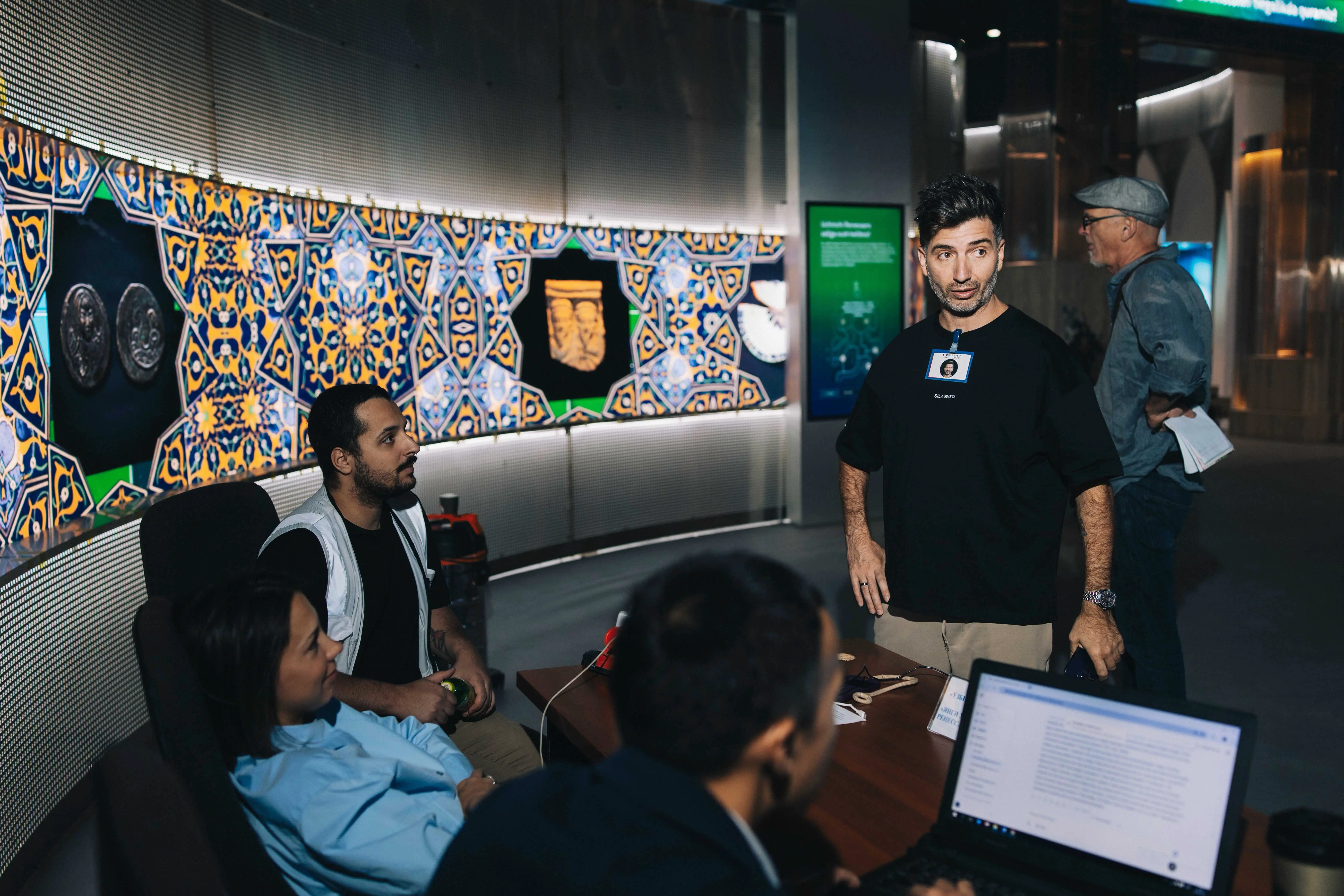
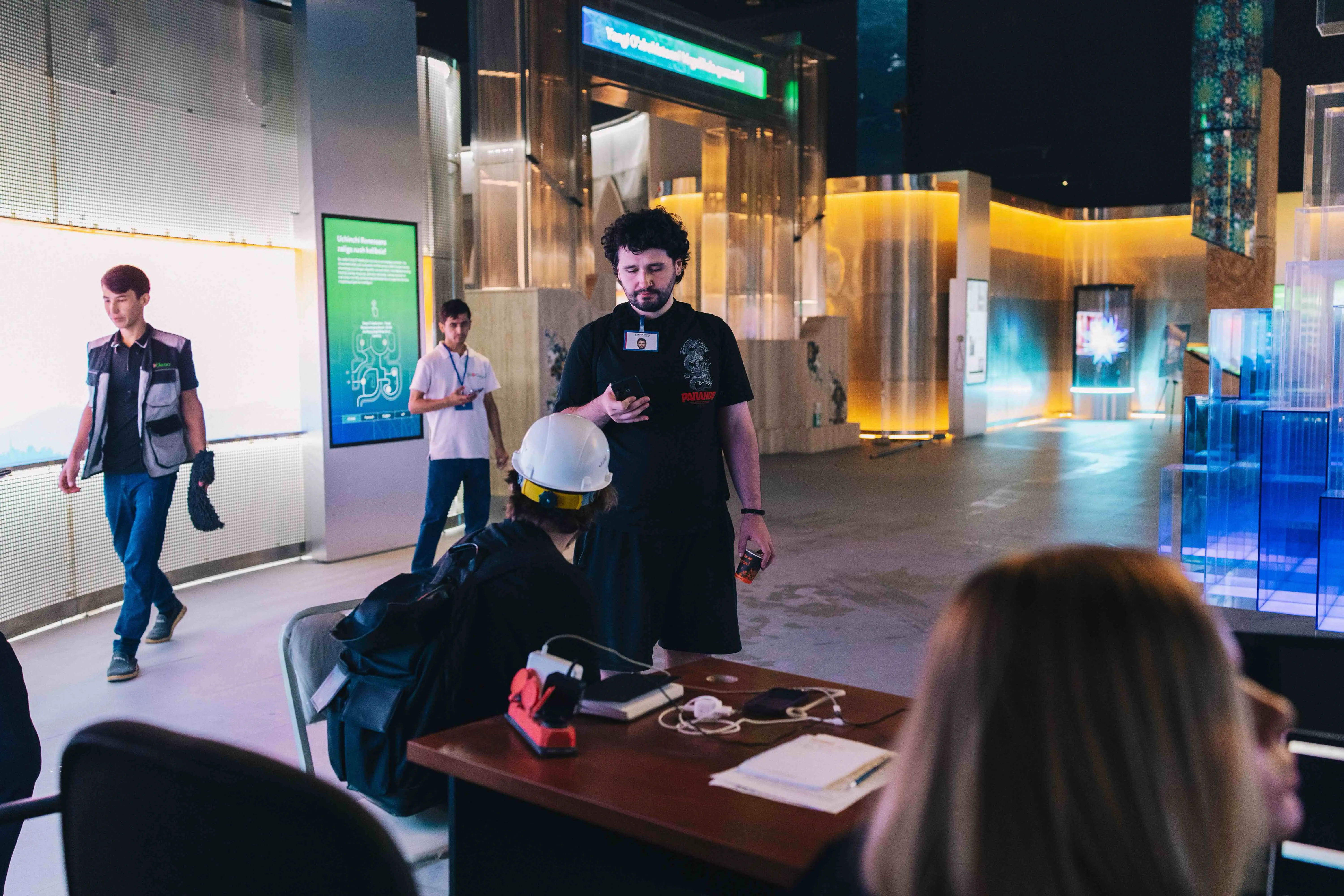
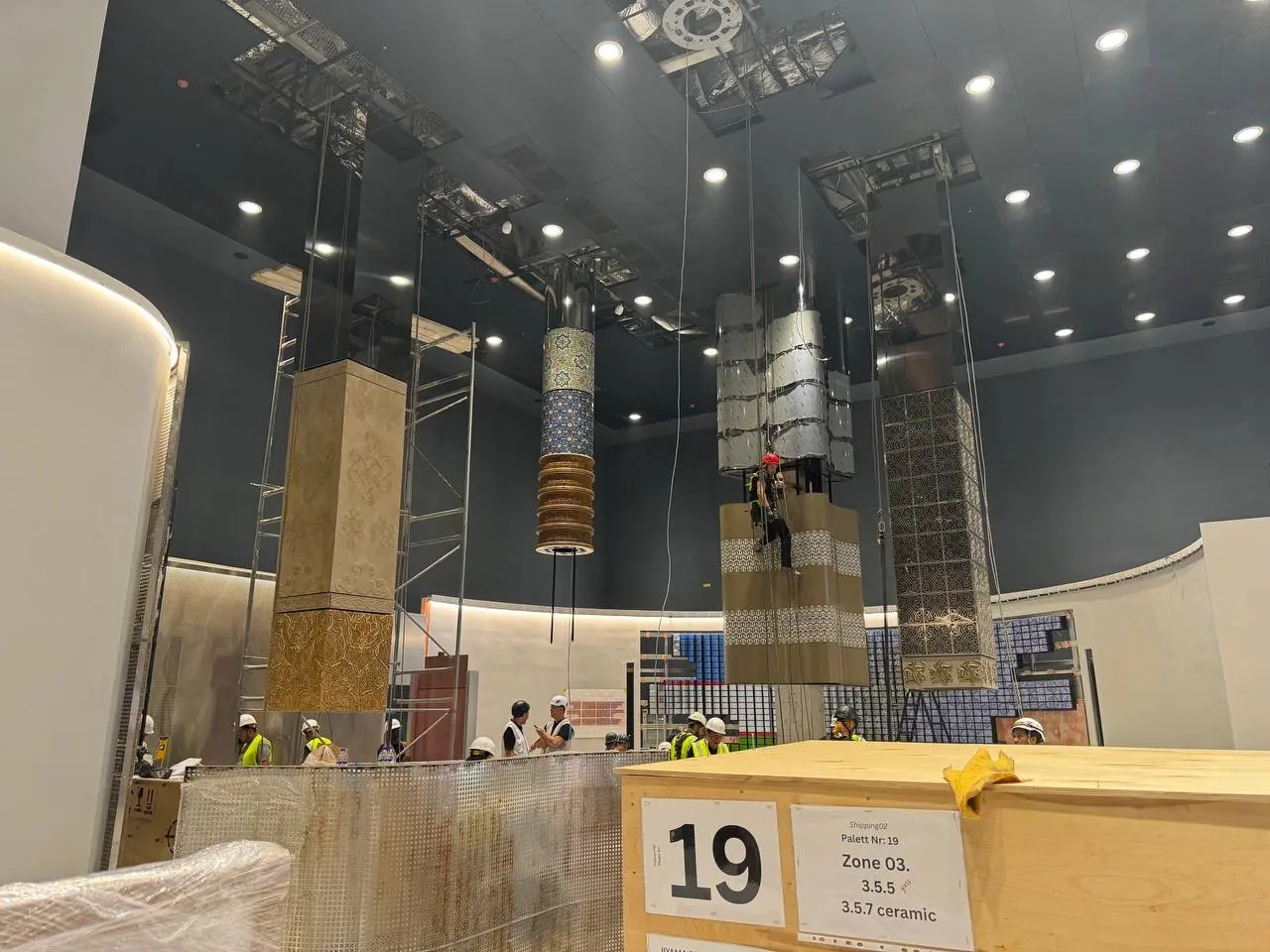
The project was delivered through a continuous, parallel workflow: concept development, design, procurement and installation were carried out simultaneously rather than divided into conventional stages.
The multimedia installations were assembled while construction and interior finishing were still underway.
Engineering solutions were developed in Germany, Poland and the United Kingdom. The concept and content were produced in Russia, while construction took place in Tashkent.
A single production hub coordinated the entire process through daily meetings, daily contractor reporting and clearly defined responsibility for each exhibition zone.
The content was refined through regular reviews with the Administration of the President of Uzbekistan and relevant government ministries.
In total, the project went through more than 250 rounds of approval and revision, including four complete versions of the exhibition concept.
This delivery model made it possible to complete the entire project in 7.5 months.
A Museum Recognized Around the World
Even before opening, the Center received significant international recognition.
Smithsonian Magazine named it one of the ten most anticipated museums of 2026. BBC Travel included it among the year's major museum openings, while Prix Versailles selected it as one of the world's most beautiful museums.
Following its opening, the complex was entered into Guinness World Records as the world's largest museum of Islamic civilization by area.
The project was also featured by Condé Nast Traveler, BBC History, National Geographic, CNN, Euronews and other international publications, placing it among the most prominent museum initiatives of recent years.
Partners
We would like to thank the Center for Islamic Civilization and its director, Firdavs Abdukhalikov, for their trust and for the opportunity to contribute to the creation of one of the world's largest contemporary cultural centers.
We also thank our key partners: JSC Trest-12 for delivering the architectural and construction works, and the international company BeWunder for its comprehensive contribution to the exhibition.
SILA SVETA is Pitch's strategic multimedia partner.